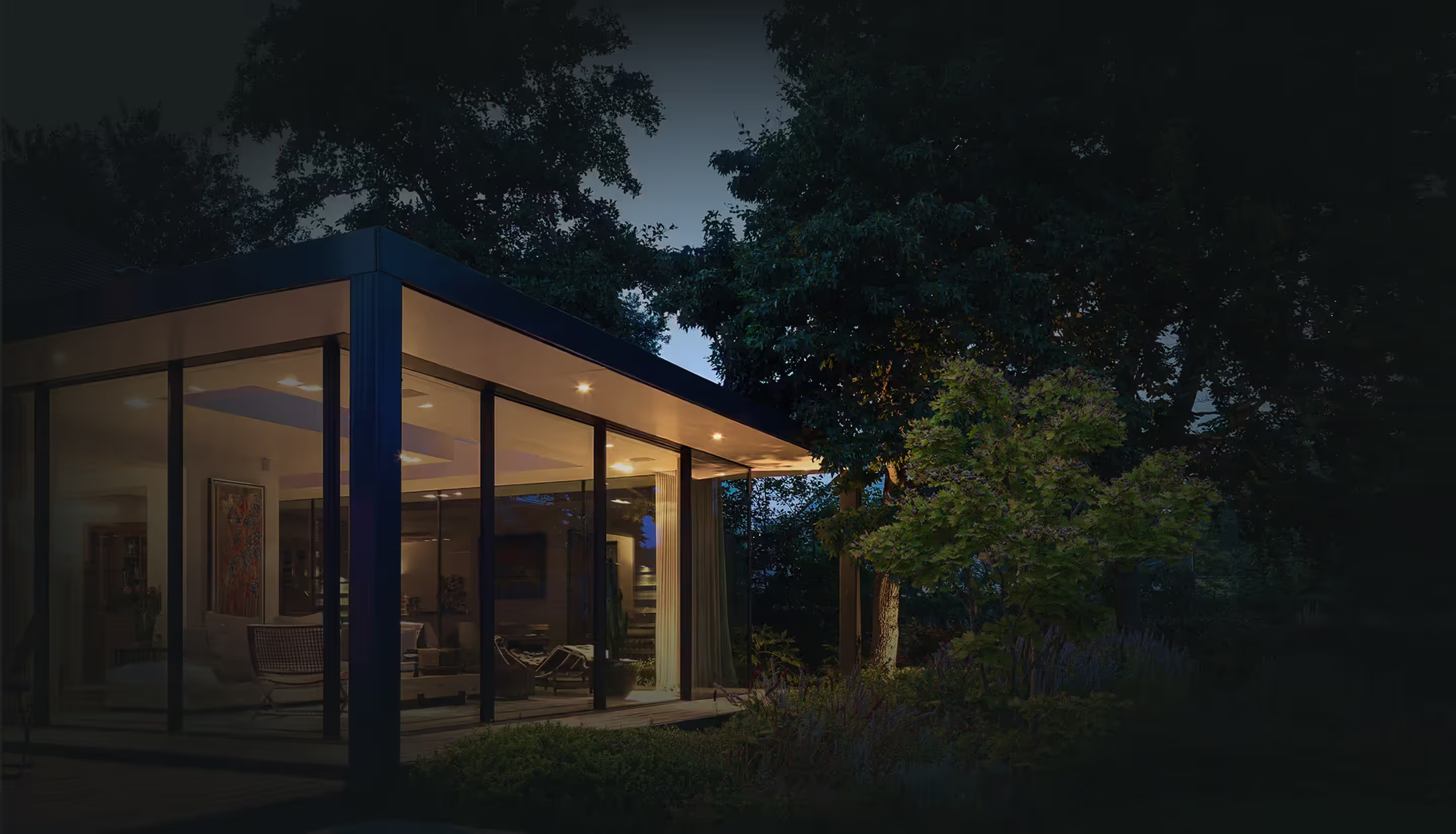
What kind of homes are here?
Older Old Town homes on varied lot patterns, established neighborhood properties, newer construction and planned communities, townhomes, condominiums, and larger residential homes. Property age, lot configuration and association structure vary widely inside the one city.
What makes this market different?
Four things sit on top of price and home design in Lafayette: the Old Town Neighborhood Overlay, Coal Creek and the drainage corridors, metropolitan districts inside the newer communities, and planned safety and multimodal work along US 287 with regional planning affecting State Highway 7.
What should a buyer verify?
Property age and condition, Old Town overlay or other zoning, permit history, sewer, floodplain and drainage, HOA, metropolitan or special district, taxes, builder and warranty, future development, transportation, school assignment, open-space ownership, and insurance. The full sheet is in the due diligence section below.
Who governs the property?
The City of Lafayette, incorporated. Its Planning Department reviews development for zoning and municipal standards and the city maintains floodplain regulations and mapping, and a metropolitan district can add taxes, infrastructure, services and future obligations on top of that.
Where are the current listings?
Under property types on this page, drawn from the same feed the listings page uses and matched to Lafayette by mailing city. The listings page carries every property on this site.
What a Lafayette search is weighing
A Lafayette search should consider more than price and home design. Old Town standards, Coal Creek and drainage conditions, future development, association structures, transportation projects, lot configuration, and property age can all influence use and value.
The four settings below are that list set out in parallel: what each kind of property is, and then what to investigate about it before relying on anything the listing says.

Four settings a Lafayette search turns up
Each stratum states what the property is, then what to investigate about it. The categories overlap at their edges: a townhome can sit inside a planned community, and Old Town includes remodeled properties as well as original ones.
Old Town Lafayette
Old Town reflects Lafayette's mining and rural history and includes older homes, remodeled properties, infill, varied lot patterns, and local commercial access. The City of Lafayette states that the Old Town Neighborhood Overlay is intended to guide neighborhood character, infill, additions, and accessory structures.
Verify
- Overlay requirements
- Historic context
- Setbacks
- Building scale
- Accessory dwelling potential
- Addition permits
- Sewer condition
- Parking
- Lot boundaries
- Prior work
- Future nearby development
Established neighborhoods
Established neighborhoods may provide mature landscaping, parks, trail access, and homes representing several decades of construction. Because a single neighborhood can hold several construction eras, condition is a question about the individual address rather than about the area.
Verify
- Roof
- Foundation
- Drainage
- Sewer
- Windows
- Additions
- Renovation quality
- HOA where applicable
- Energy upgrades
- Lot condition
- Insurance
Newer and planned communities
Newer and planned communities may include detached homes, townhomes, condominiums, shared amenities, metropolitan districts, and future phases. A metropolitan district can affect property taxes, infrastructure, services, and future obligations, so a property-tax projection matters here as much as the builder's warranty.
Verify
- Builder
- Warranty
- HOA
- District taxes
- Future construction
- Landscape completion
- Amenities
- Road timing
- Commercial plans
- School assignment
- Independent inspection
- Property-tax projection
Attached and lower-maintenance homes
Lafayette's attached housing includes townhomes and condominiums, some of them inside the newer planned communities. What the association owns, insures and maintains is set by its governing documents, so the run below is a documents review as much as a property inspection.
Verify
- Association budget
- Reserves
- Insurance
- Deductibles
- Assessments
- Exterior maintenance
- Roof
- Parking
- Storage
- Rental rules
- Pet rules
- Litigation
- Loan eligibility
Homes for Sale in Lafayette
Active listings drawn from the same feed the listings page uses, matched to this page by mailing city.
No property in the current feed carries a Lafayette mailing city today, so there is nothing to show here. A search is not limited to one brokerage's inventory: the listings page reaches every property on this site, and a consultation is where the search is built around your criteria and watched as new, returning and reduced listings appear.
Listing data from REcolorado - Metrolist MLS. Listings courtesy of Berkshire Hathaway HomeServices Colorado Real Estate, LLC – Erie. Properties are matched to this page by mailing city, which does not establish the governing county or jurisdiction for a given parcel. Verify both for any property you intend to pursue.
Open space and trails
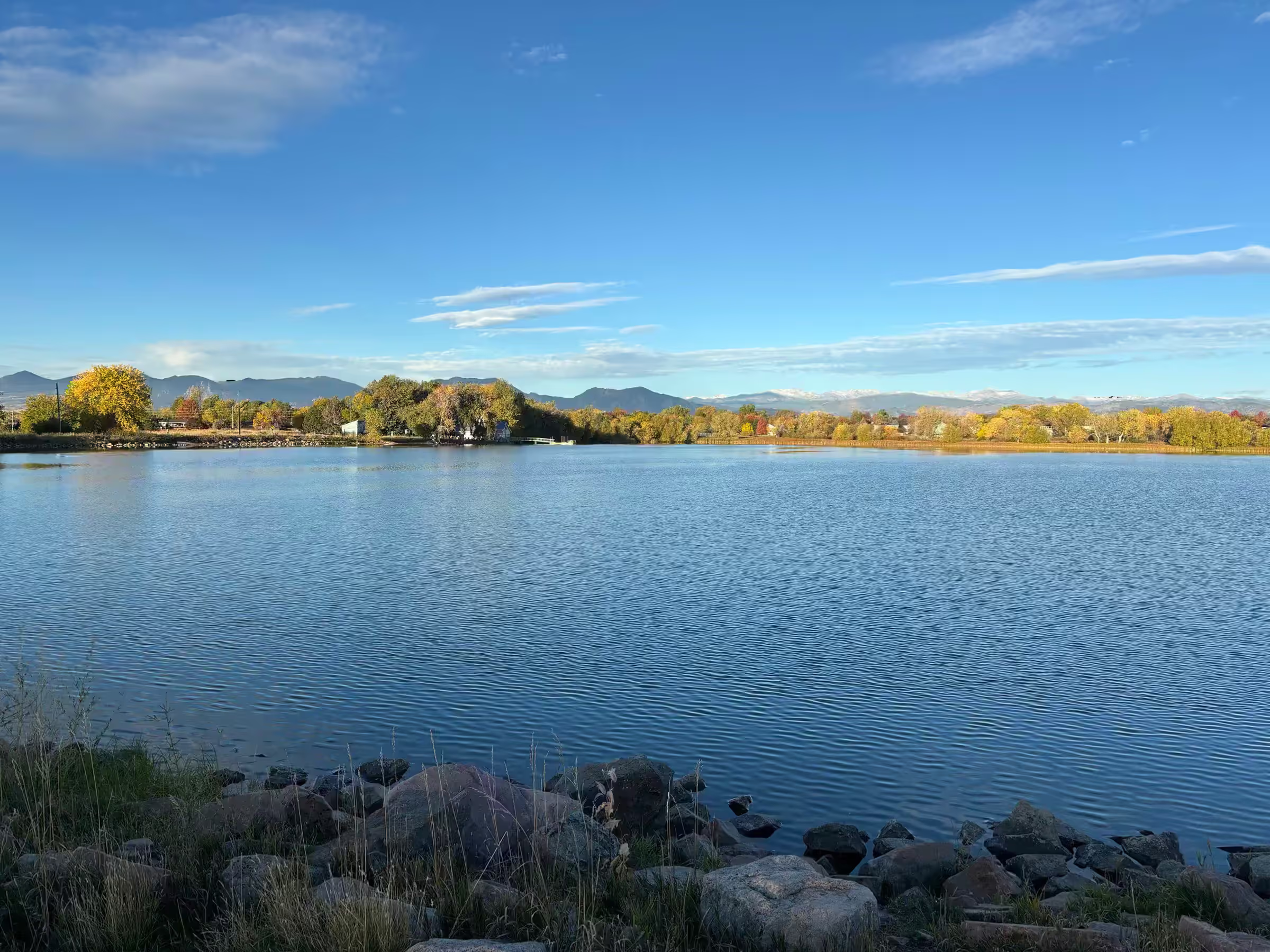
The City of Lafayette reports approximately 1,640 acres of open space and more than 20 miles of trails.
These resources connect neighborhoods and provide recreational access, but buyers should evaluate the exact relationship between the property and adjoining public land, trails, drainage corridors, and future connections.
Reading an open-space adjacency
An adjacency is a relationship between two parcels and only one of them is for sale. Every line below is answered for the specific address.
Public use of the land next door
04- Trail traffic
- Public parking
- Dogs and recreational use
- Maintenance
The ground itself
05- Vegetation
- Grassfire exposure
- Drainage
- Whether views are legally protected
- Future trail plans
Regional access, and the routes to test
Lafayette is positioned near US 287, State Highway 7, and routes connecting Boulder, Louisville, Erie, Broomfield, and other regional destinations.
The City of Lafayette reports that current planning includes safety and multimodal work along US 287, as well as regional transportation planning affecting State Highway 7 and surrounding corridors.
The commute test
Travel time depends on the exact property, route, hour, and construction. Test the commute under realistic conditions rather than accepting an estimate.
Drives to make yourself
05- Peak-period drive
- School traffic
- Boulder commute
- Denver-area commute
- Northern commute
Access and disruption
04- Transit stops
- Bicycle routes
- Planned construction
- Future road connections
The communities at the other end of those routes
Lafayette connects toward Boulder, Louisville, Erie, and Broomfield. Two of those have community pages here, built to the same shape as this one so the three can be read against each other.
Coal Creek and the drainage corridors
Coal Creek and other drainage areas can affect individual Lafayette properties. The City of Lafayette maintains floodplain regulations and mapping, and the city's history includes significant flooding along Coal Creek.
Flood exposure varies by property. Coal Creek and other drainage conditions should be investigated through official city resources and through property-specific inspection, not inferred from the neighborhood.
The property-specific flood review
Four separate questions. A clean answer to one of them does not settle the others.
Mapping and record
03- Regulatory flood zone
- Prior flooding
- Elevation information
Water at the house
04- Drainage
- Basement history
- Sump pump
- Foundation drains
Beyond the lot line
02- Culverts
- Nearby infrastructure
Cost and consequence
02- Insurance
- Renovation limitations
Zoning, overlays, and what is approved nearby
The City of Lafayette's Planning Department reviews development for zoning and municipal standards, and the city publishes current planning and zoning maps.
Before buying, review
Working outwards from the parcel itself to the land around it, because that is the order in which each answer stops being under your control.
Rules on the parcel
03- Zoning
- Overlay district
- Metropolitan districts
Applications and approvals
02- Approved developments
- Pending applications
Nearby work and land
06- Road projects
- Commercial plans
- Parks
- School sites
- Utility projects
- Neighboring parcel ownership
Confirm for the specific address
The page's longest run, grouped by what each item is actually about rather than by the order it was written in.
The structure and its record
04- Property age and condition
- Permit history
- Sewer
- Builder and warranty
Rules, money, and obligation
05- Old Town overlay or other zoning
- HOA
- Metropolitan or special district
- Taxes
- Insurance
Land, water, and surroundings
05- Floodplain and drainage
- Open-space ownership
- Future development
- Transportation
- School assignment
The county-wide version of this list
Two pages carry the investigations that are not specific to Lafayette. The buying guide sets out the county-wide due diligence, and the relocation page compares Boulder County's communities side by side.
What a Lafayette listing has to explain
A strong Lafayette listing should explain the property itself and the context it sits in. The two groups below are the questions the due diligence sheet asks, answered in advance by the seller.
The listing file
The property
05- Old Town or neighborhood context
- Renovation and permits
- Property condition
- Lot and outdoor space
- Property-specific flood or drainage information
The context
04- Trail and open-space access
- Association and district information
- Transportation access
- Current competition
Two files, depending on the property
For newer properties
Organize builder documents, warranties, and seller-completed improvements.
For older homes
Records concerning sewer, roof, additions, electrical, plumbing, and drainage can reduce buyer uncertainty.