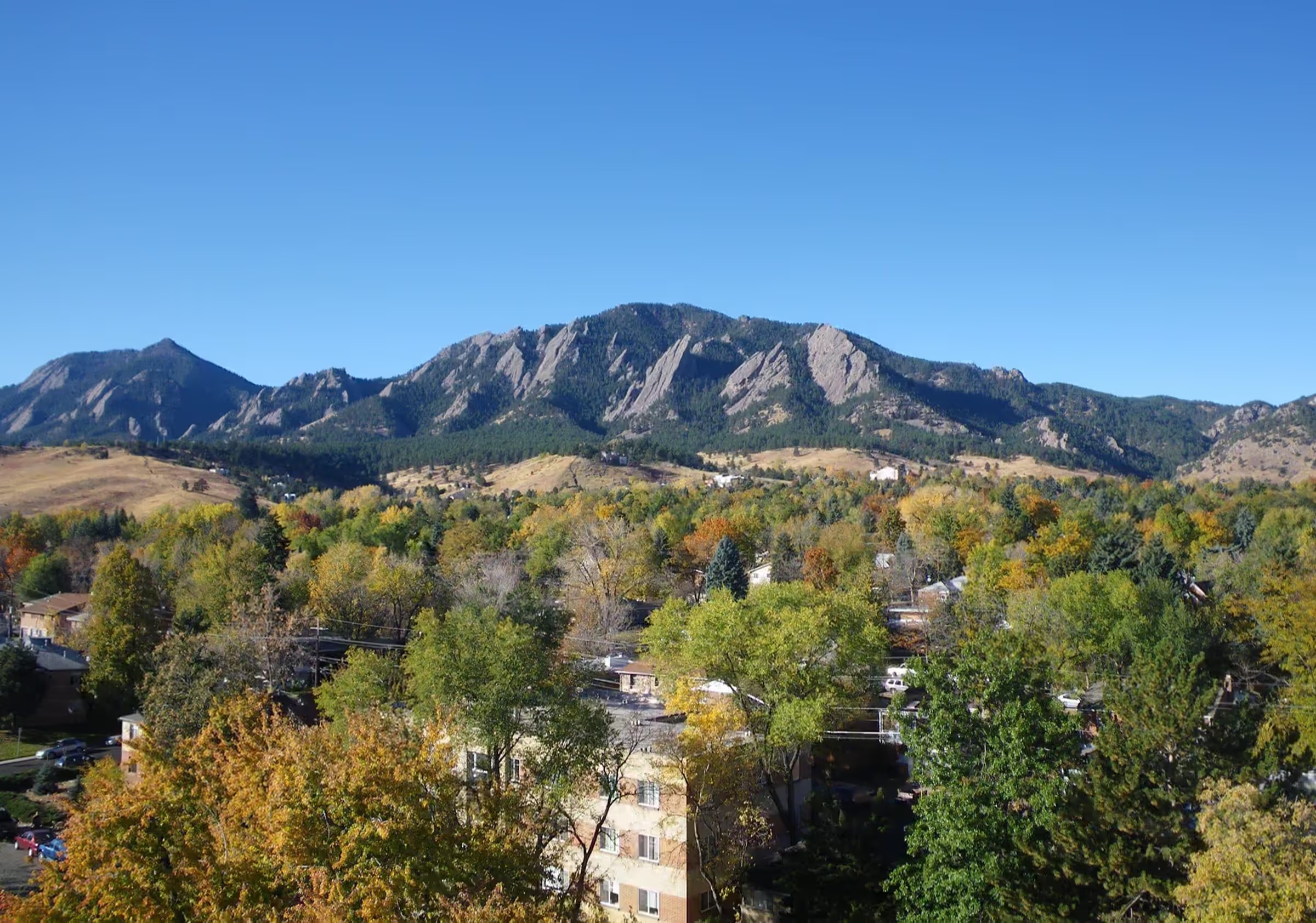
What kind of homes are here?
Louisville includes historic and older homes, established neighborhood properties, attached housing, new construction, and rebuilt homes. Old Town adds historic structures, remodeled properties, infill, and smaller-lot residences close to local commercial areas.
What makes this market different?
One street can carry original construction, a repaired house, a full rebuild under updated standards, and new infill. Each category can involve different construction standards, insurance questions, permitting records, operating costs, and resale considerations, so the category has to be established before the price is judged.
What should a buyer verify?
First, whether the structure was destroyed, damaged, remediated, repaired, or unaffected, and then the permit history, final approvals, insurance quote, and fire-hardening features that follow from that answer. Historic or Old Town status is the second question, because it governs what may be altered, added, or redeveloped.
Who governs the property?
The City of Louisville, an incorporated municipality with its own municipal services. City programs decide much of what matters here: historic-preservation and Old Town zoning requirements, building permits and final approvals, and a Fire Hardening Code that applies to qualifying permit applications submitted on or after January 21, 2026.
Where are the current listings?
In the listings panel further down this page, drawn from the same feed the main listings page uses and matched to Louisville by mailing city. Because the match is on the mailing city, confirm the governing jurisdiction and the construction history of any address it returns.
What a Louisville search is sorting
A property search should distinguish among original construction, remodeled homes, post-fire rebuilding, new infill, association-governed communities, and historic properties.
Each category can involve different construction standards, insurance questions, permitting records, operating costs, and resale considerations. Two homes offered at the same price can sit in two different categories, and the listing photographs will not tell you which.
Original, remodeled, repaired, rebuilt, new
Do not assume that all post-fire properties have identical construction, warranties, or insurance characteristics. Appearance and construction year do not establish which of these a house is. Official permit history, seller disclosures, remediation or repair documents, insurance information where available, and local records do. Two further distinctions, historic status and association governance, run across all five and are treated as property types in the next section.
Original construction
The structure was unaffected and stands as it was built. Establish that from the permit history and the seller's disclosures rather than from the year on the listing, and inspect it as the older home it is: structure, sewer, roof, electrical, plumbing, drainage, foundation, windows, permits, and renovation quality.
Remodeled
An older home carried through one or more renovations, which is a different claim from repaired and a different claim again from rebuilt. Addition permits, renovation quality, and any energy updates that came with the work are what a buyer reviews, and the permit record is what confirms the work was approved.
Repaired
The structure was damaged rather than destroyed, and was repaired rather than fully rebuilt. Smoke or environmental remediation, repair documentation, utility work, and the insurance claim context where available are the records that describe what was actually done.
Rebuilt
The structure was rebuilt and may have been constructed under newer codes than the original property. Confirm the permit date, the applicable code, the plans, the inspections, and the final approval, then ask for builder information, warranties, energy documentation, and soils or structural information.
New construction
Old Town includes infill, and the wider market includes newer construction that was never part of the post-fire rebuilding. It carries its own permit record, builder, and warranties, and the file a buyer should ask for is the same one a rebuild produces, down to the builder punch list and the systems and appliance records.
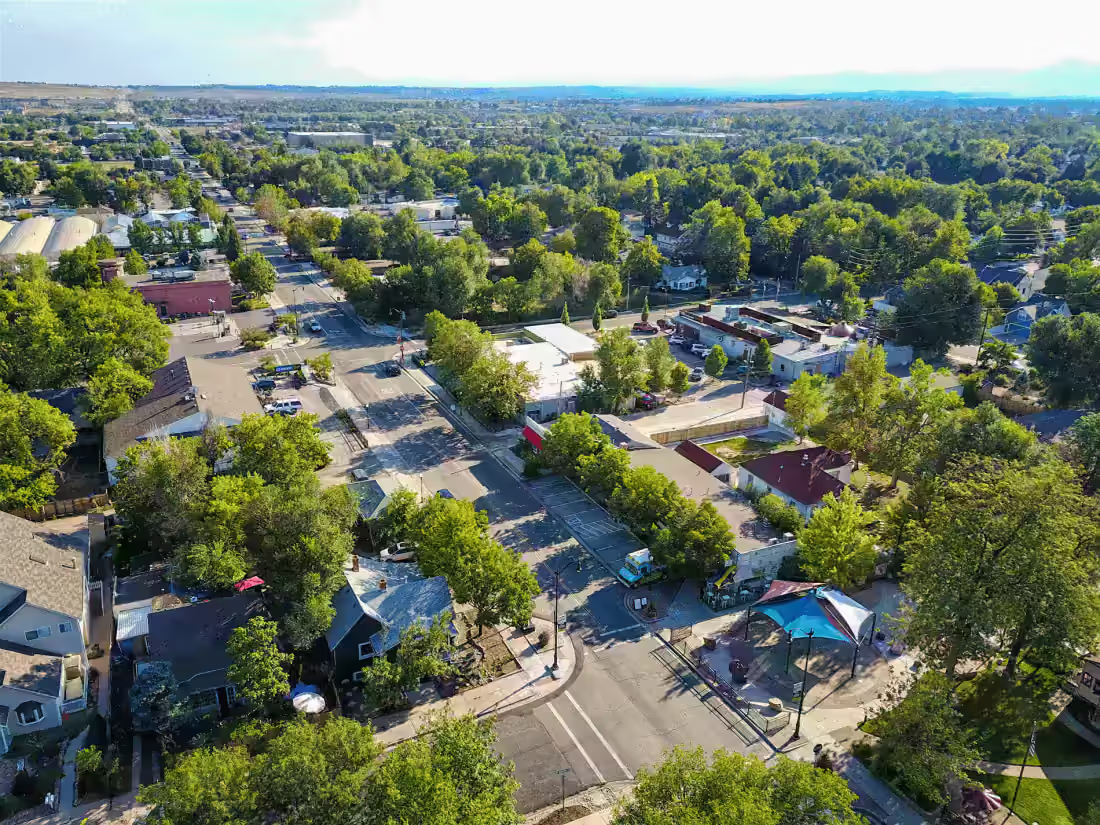
Four settings, and what to establish about each
What each type is, followed by the property-specific run a buyer works through before deadlines pass. Nothing below is general advice; every line is a question a particular Louisville file has to answer.
Old Town Louisville
Old Town includes older homes, historic structures, remodeled properties, infill, smaller-lot residences, and locations close to local commercial areas. Louisville maintains historic-preservation programs and Old Town zoning requirements intended to guide alterations, additions, and redevelopment. Certain properties may be subject to both, so verify the exact address and the proposed work rather than the block.
Verify
- Historic status
- Old Town overlay requirements
- Addition permits
- Demolition or redevelopment rules
- Lot and setback conditions
- Parking
- Basement and sewer condition
- Renovation quality
- Future nearby infill
Established neighborhoods
Established neighborhoods may offer mature landscaping, parks, trails, and homes representing different periods of development. Some are governed by an association and some are not, so confirm which applies to the specific address before assuming either.
Verify
- Roof and exterior
- Windows
- Sewer
- Foundation and soils
- Additions
- Energy updates
- HOA where applicable
- Lot drainage
- Insurance
- Future renovations
Rebuilt and newer homes
The Marshall Fire destroyed or damaged hundreds of Louisville structures, as the city's document archive records. As rebuilding continues, the market includes homes constructed under updated standards as well as properties that were repaired rather than fully rebuilt. Do not assume that all post-fire properties have identical construction, warranties, or insurance characteristics.
Verify
- Building permits
- Final approvals
- Plans
- Builder information
- Warranties
- Energy documentation
- Soils or structural information
- Insurance claim context where available
- Landscape completion
- Builder punch list
- Systems and appliance records
Attached homes
Townhomes and condominiums may provide lower-maintenance ownership and access to Louisville without responsibility for a large lot. The association documents carry the real terms of that trade, from who is responsible for the roof to what the deductible is when a claim is made.
Verify
- HOA budget
- Reserves
- Insurance
- Deductible
- Assessments
- Exterior responsibility
- Roof responsibility
- Parking
- Storage
- Rental rules
- Pet rules
- Litigation
- Loan eligibility
Open lands and trails
Louisville reports an interest in approximately 2,000 acres of open lands and a trail system of roughly 32 miles.
Open-land adjacency can contribute views, access, and privacy, but buyers should also investigate trail activity, parking, vegetation, wildfire or grassfire conditions, management practices, and whether the adjoining property is permanently protected.
An open-land view is not automatically permanent. Confirm ownership, easements, designation, management plan, and neighboring development rights before treating the view as part of what you are buying.
The two figures the city publishes
Reported by the city, and worth confirming as current before either number is relied on.
- Open lands interest
- About 2,000 acres
- Trail system
- About 32 miles
Fire history, construction, and insurance
Marshall Fire history remains part of property-specific due diligence in Louisville. The work is done address by address, because the answers do not carry from one property to the next.
What the fire research covers
Research may include the following, grouped by what is being examined: the building, the ground it sits on, and what the result costs to cover. Every line is answered for one address, not for a block.
The structure itself
04- Whether the structure was destroyed, damaged, remediated, repaired, or unaffected
- Building permit history
- Smoke or environmental remediation
- Rebuild documentation
The lot and the work around it
03- Landscaping
- Utility work
- Community infrastructure work
Cost and coverage
03- Warranty
- Insurance availability
- Rebuild-cost estimate
Routes, and testing them honestly
Louisville has access to US 36, regional transit, bicycle connections, and nearby employment centers. The city's transportation network includes connections to the US 36 Bikeway and RTD services.
Buyers should test the actual route and travel period rather than relying on an off-peak estimate.
Consider before you commit to the address
Each trip below at the hour it would actually be made, and each condition below on a day that is not convenient.
Trips to time
04- Boulder commute
- Denver-area commute
- Airport travel
- Household members commuting in different directions
Conditions that change the trip
03- School-hour traffic
- Winter weather
- Planned road projects
Without the car
02- Bicycle access
- Transit stops
Confirm for the specific address
Fifteen confirmations for one address. The first group changes what the other three have to contain, which is why construction history sits at the top of this page rather than in the inspection period.
Status and records
03- Historic or Old Town status
- Original, repaired, or rebuilt construction
- Permit and final-inspection records
Building and ground
04- Sewer condition
- Roof
- Foundation
- Flood or drainage
Cost and obligation
03- Insurance quote
- Fire-hardening features
- HOA and reserves
Around the parcel, and after the purchase
05- Open-land ownership
- Transportation pattern
- School assignment
- Future development
- Renovation feasibility
Bring an address, not a category
Permit history, final approvals, insurance, and Old Town status are specific to one parcel, and a listing description is not the record. Start with a particular Louisville property and the review can establish which of the construction histories on this page it actually belongs to.
Louisville homes for sale
Active listings drawn from the same feed the listings page uses, matched to Louisville by mailing city. A mailing city is not a jurisdiction, so confirm the governing city for any address before relying on it.
No property in the current feed carries a Louisville mailing city today, which is a statement about this feed rather than about the market. The listings page reaches every property published on this site, and a consultation is where a search gets built around specific criteria and monitored as new, returning, and reduced listings appear.
Listing data from REcolorado - Metrolist MLS. Listings courtesy of Berkshire Hathaway HomeServices Colorado Real Estate, LLC – Erie. Properties are matched to this page by mailing city, which does not establish the governing county or jurisdiction for a given parcel. Verify both for any property you intend to pursue.
Marketing a Louisville home
The marketing strategy should accurately distinguish original construction, a renovated property, a repaired property, a rebuilt property, new construction, a historic property, and an association-governed home.
For a rebuilt residence, complete documentation can improve buyer confidence. The campaign can explain construction history, design, builder, systems, permits, energy features, and the property's relationship to current competing inventory.
The listing file
The first group is what the marketing has to state correctly. The second is what a rebuilt residence should be able to produce when a buyer asks.
Categories the marketing must not blur
07- Original construction
- Renovated property
- Repaired property
- Rebuilt property
- New construction
- Historic property
- Association-governed home
What the file may include
10- Plans
- Permits
- Final approvals
- Builder and architect
- Warranties
- Energy systems
- Fire-hardening features
- Landscape work
- Service records
- Property insurance information where appropriate