Jacob Baer
Aviation Real Estate
Boarding pass
FromEIKErie
ToAPADenver
- Flight time
- 0:20
- Distance
- 28 NM
- Aircraft
- SR22T
Departures
APA
Denver
Arrivals
BJC
Boulder County
Jacob Baer Aviation
Front Range · Mountain West
The hangar is part of the house.

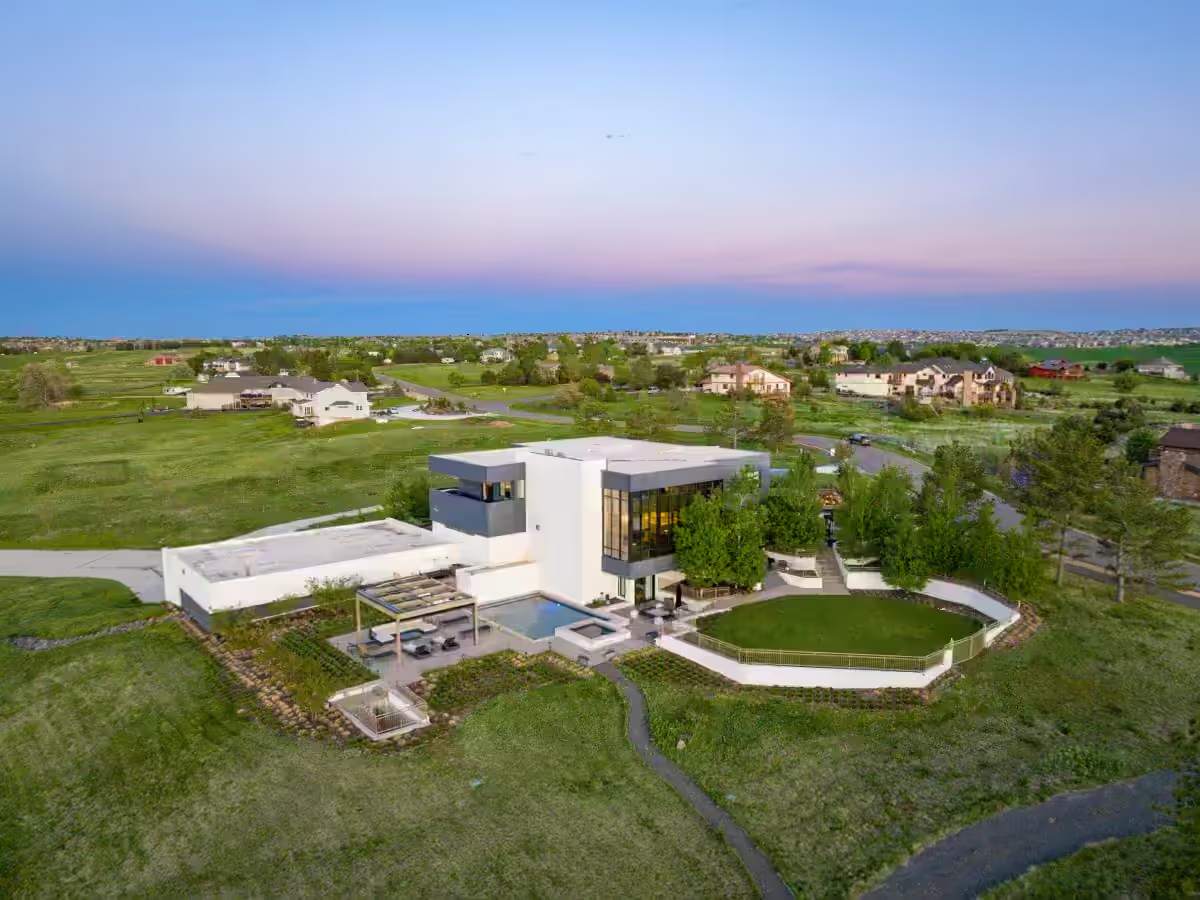
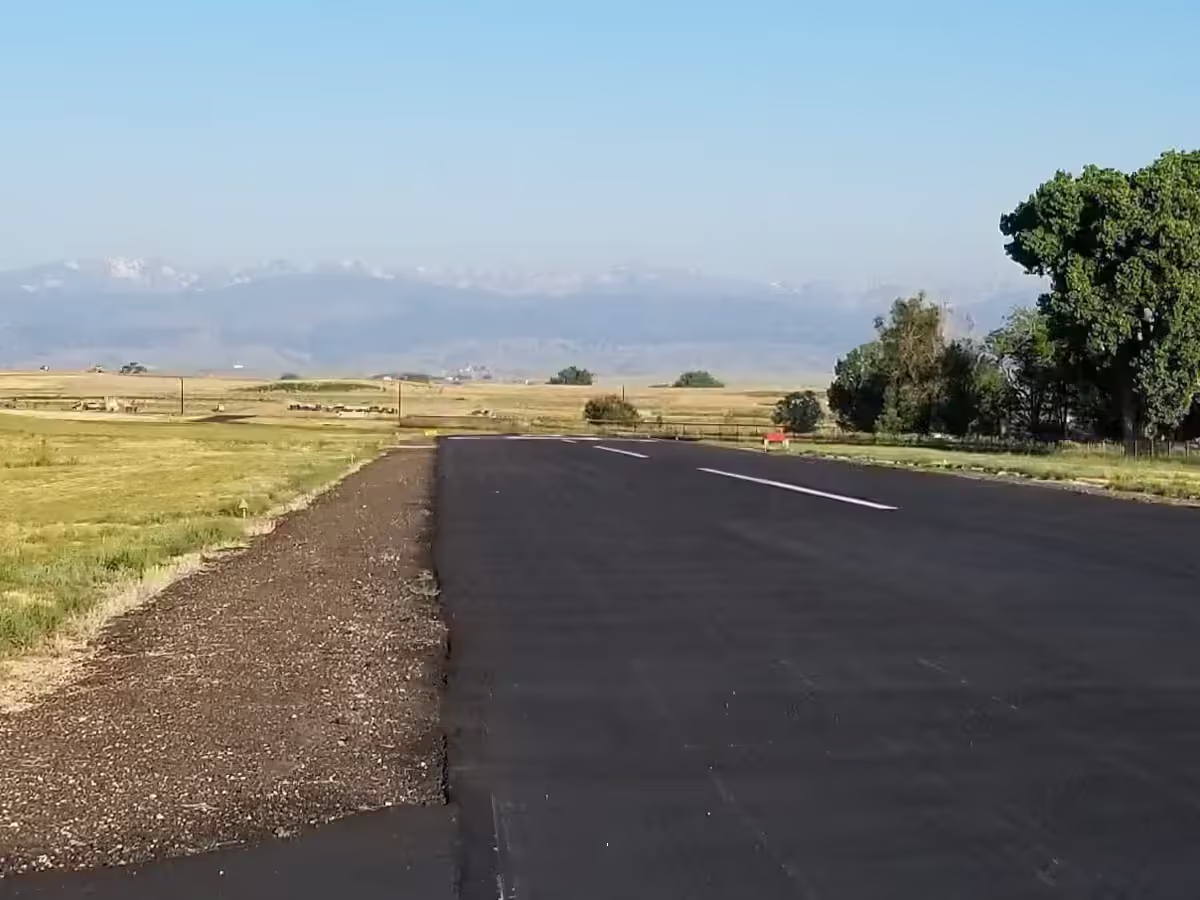
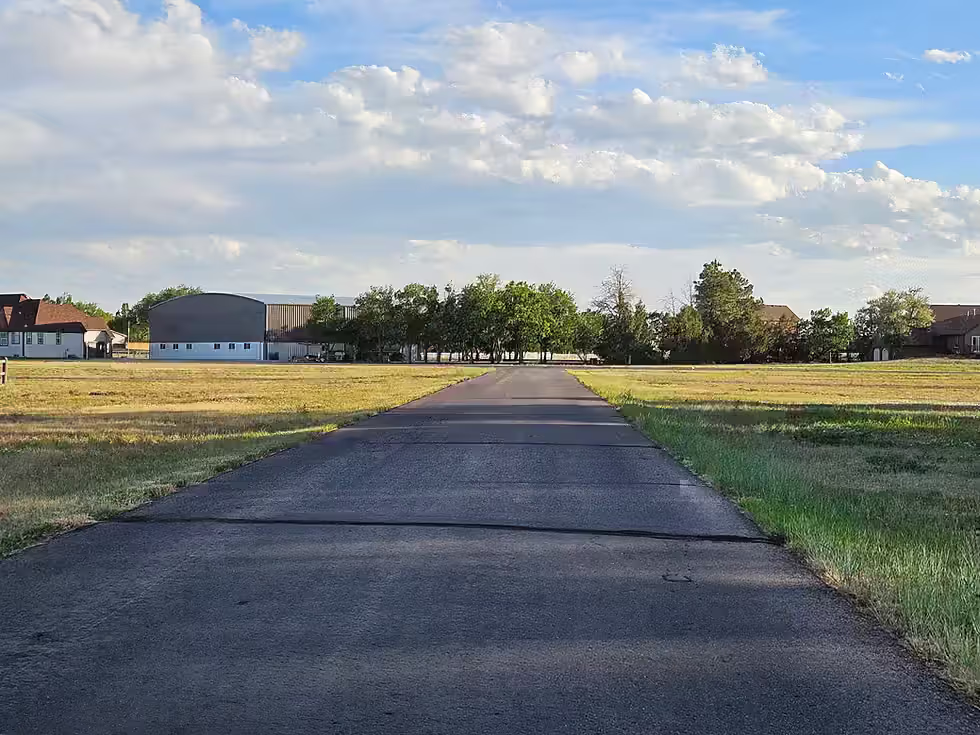
Aerial flythrough of a Colorado airpark residence: a private runway running past the house to an attached hangar, descending to the courtyard where the owner's aircraft is parked at the hangar door.
Block times for a high-performance piston at typical cruise, wheels up at Erie. Every destination on the board is a same-day round trip from the Front Range.
Jacob Baer
Aviation Real Estate
Boarding pass
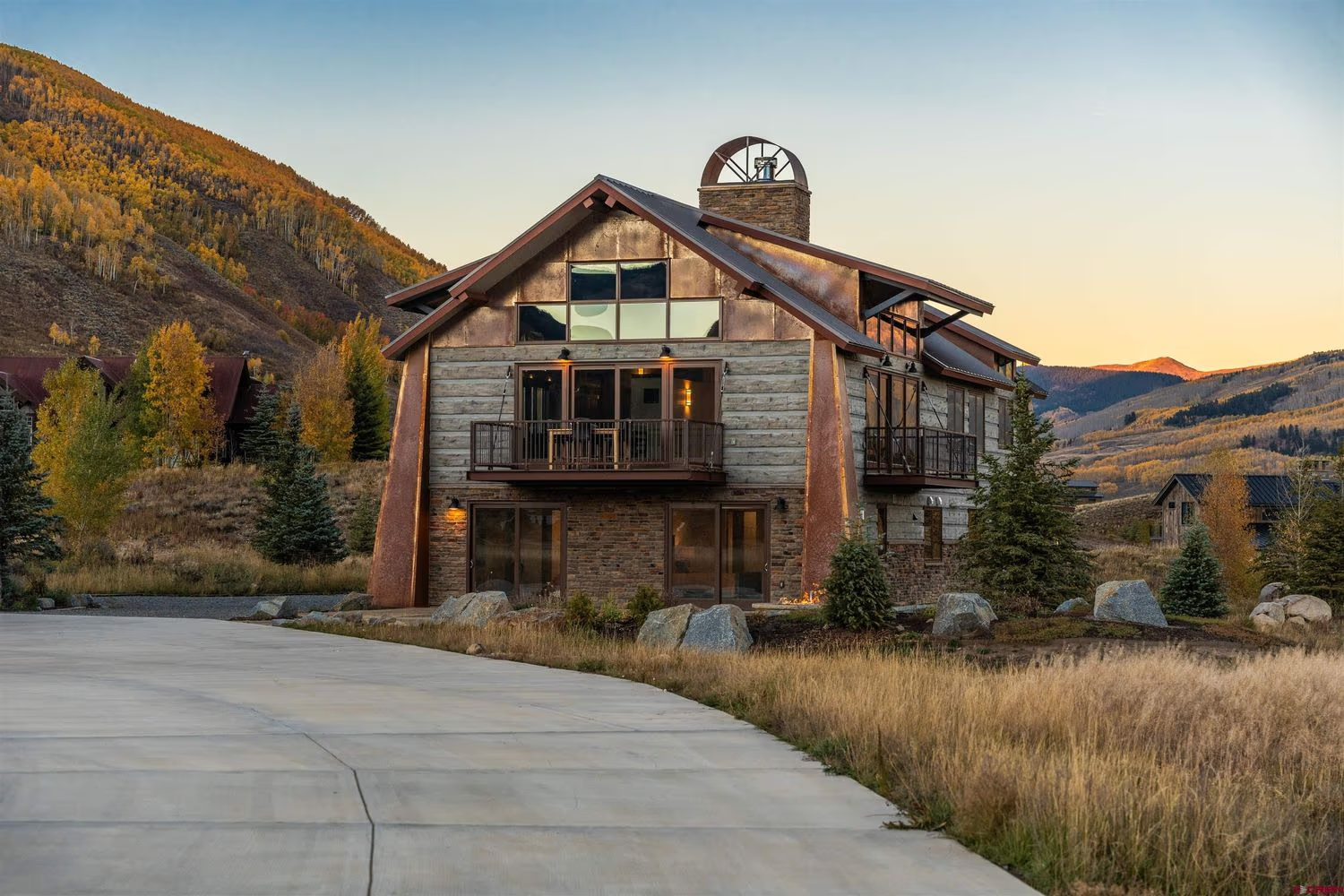
Fly-in living brings the aircraft home without asking you to compromise on comfort, privacy, or design. Colorado's aviation communities include refined modern residences, spacious acreage properties, private hangars, generous workshops, mountain views, and room for family and guests. The right property should support both missions: how you want to fly and how you want to live once the hangar door closes.


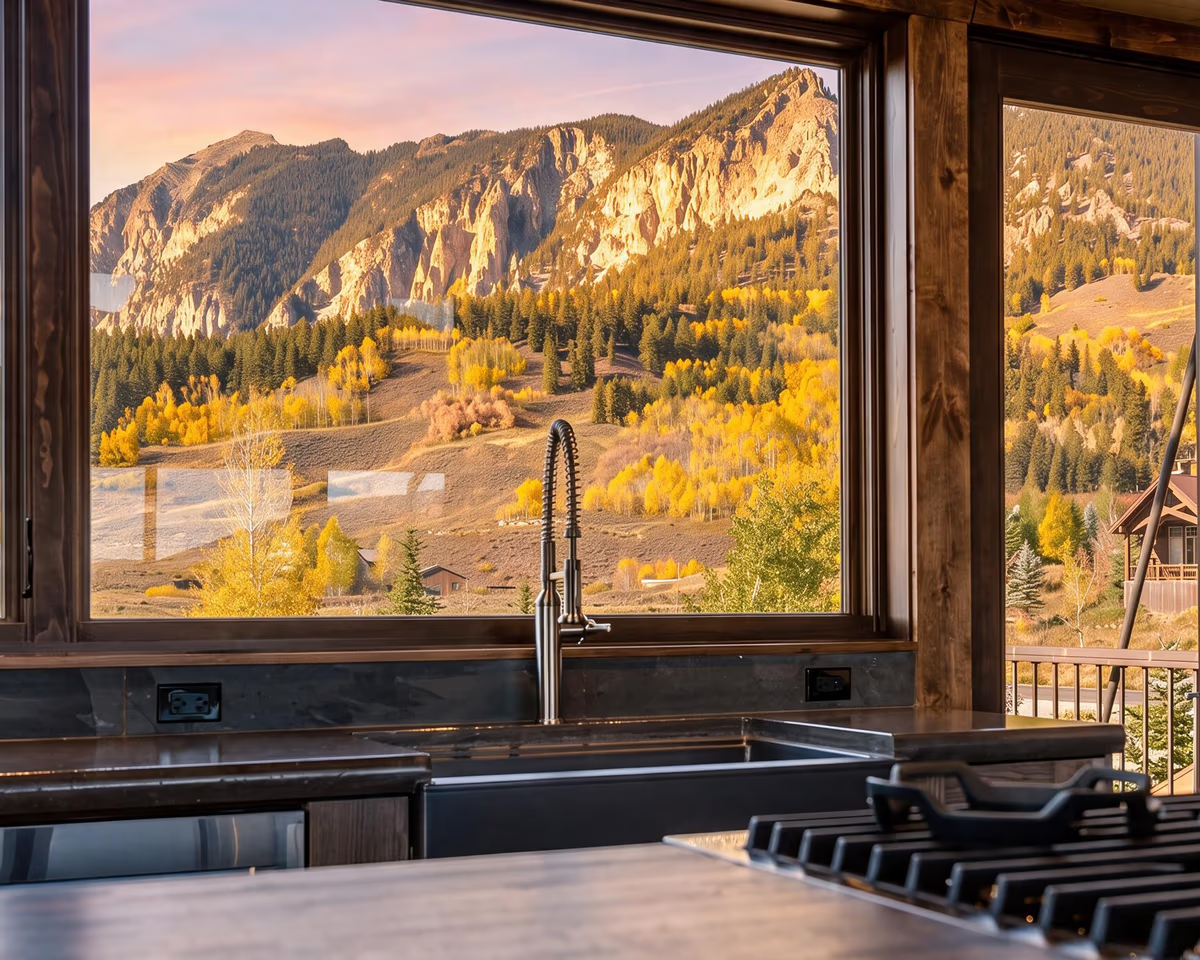

A fly-in home turns seasonal living from a complicated relocation into a familiar departure from your own property. Keep the aircraft, luggage, outdoor gear, and home base together, then leave on your schedule without commercial airport lines, rental-car logistics, or restrictive baggage limits. Whether you spend Colorado summers near the mountains, seek warmer winter skies, or divide your year between two homes, direct aircraft access makes every transition more private, comfortable, and enjoyable.
Boulder County is where Jacob flies from, and the fly-in communities this site follows ring it: Erie Air Park and Parkland Estates near Erie, Van Aire Skyport east of Brighton, Kelly Air Park in Elbert County. Each is built around its own runway, with its own kind of ownership behind it.
Most of what decides a purchase never appears in the listing: the airport, the hangar, the association, the title, the financing. A conversation is the right place to begin.
The belt lists Colorado airports from Erie and Boulder to Aspen, Telluride, Eagle, and Steamboat Springs, while the map shows manufacturer-published range for four representative aircraft over real terrain, subject to aircraft performance, weather, routing, and destination runway conditions.
A hangar at a Front Range fly-in home puts Colorado's mountain towns and much of the Mountain West within reach by owner-flown aircraft, on your own schedule and from your own property. The belt lists Colorado airports from Erie and Boulder to Aspen, Telluride, Eagle, and Steamboat Springs, while the map shows manufacturer-published range for four representative aircraft over real terrain, subject to aircraft performance, weather, routing, and destination runway conditions.
Explore the reach mapFrom Colorado's Front Range, owner-flown aircraft can make the Mountain West feel local and much of the country reachable in a day. A high-performance piston can place Aspen, Jackson Hole, Scottsdale, Dallas, Los Angeles, Chicago and Seattle within representative range. Cabin-class turboprops can extend the same home-based freedom toward Washington, New York, Miami and Boston, subject to aircraft, payload, fuel reserve, weather, routing, field elevation and runway conditions.
Illustrative geographic reach only. Figures are manufacturer-published and do not establish payload, runway suitability or a simultaneous cruise-and-range mission; actual performance varies with configuration, loading, reserves, weather, routing and field conditions. Verify with current aircraft and airport data. Not for flight planning.
Imagery: USDA NAIP via USGS The National Map · NASA Blue Marble, NASA Earth Observatory · Terrain: USGS 3DEP · Boundaries: U.S. Census TIGER/Line · Airport data: FAA and official airpark sources. Map services and data available from U.S. Geological Survey, National Geospatial Program.
An aviation property must work as a home, a hangar, and a documented connection to an airfield. These are the questions worth resolving before you commit.
Aviation real estate covers homes, residential lots, hangar properties, airpark homes, and private-runway estates where aircraft storage or airport access is a material part of ownership. A fly-in home is the residential case: a house designed around convenient aircraft access, commonly with a private hangar and a taxi route to a shared runway or nearby airport.
A house near an airport is not automatically a fly-in home. The evaluation looks at four connected elements: the residence, the hangar, the documented right to move an aircraft toward the runway, and the airfield itself. A weakness in any one of them affects usefulness, ownership cost, financing, insurance, and resale.
Four Front Range communities illustrate the range of ownership available: Erie Air Park beside Town-owned Erie Municipal Airport, Parkland Estates Airpark (7CO0), Kelly Air Park (CO15), and Van Aire Skyport (CO12).
They are not all within Boulder County, and each has a different runway, access structure, operating environment, governance model, and ownership obligation. The directory sets all four side by side.
No. Airport proximity and legal aircraft access are not the same thing, at a public-use airport or a private airpark alike.
Access can rest on a recorded taxi easement, an airport access agreement, or association membership, and at a federally obligated public airport a residential through-the-fence arrangement must satisfy the FAA's minimum conditions. None of it transfers automatically: verify the deed, title exceptions, agreements, fees, and the complete physical route between hangar and runway before relying on any of it.
Start from verified clear measurements rather than advertised square footage: the door's clear opening, interior obstructions, apron and turning space, gates, and every turn along the taxi route, compared against the manufacturer's specifications and the way the aircraft is actually handled on the ground.
The airfield is part of the fit. Colorado's elevation and summer temperatures raise density altitude, which can lengthen runway requirements and reduce climb performance, so the question is whether the field supports the aircraft, loading, and margins the mission requires. The complete measurement checklist is in the due-diligence guide.
Both sides of the property. The residential side covers title, zoning, wells and septic, roads, utilities, insurance, and financing; the aviation side covers access documents, airport or airpark rules, association governance and finances, runway condition, hangar dimensions and permits, and fees, reserves, and pending assessments.
At a private airpark, the buyer may also become one of the owners responsible for maintaining and funding the runway, taxiways, lighting, and other shared infrastructure. The complete guide works through each category with the questions to ask and who answers them.
They can require more specialized review than a conventional home. Hangars, acreage, limited comparable sales, aircraft-access arrangements, private roads, shared runway obligations, fire protection, and replacement cost can all draw questions from a lender, appraiser, or insurer.
Begin those conversations early, while contractual protections are still available. Ownership costs can also include airport-access fees, runway or taxiway assessments, association insurance, and future infrastructure projects.
The record that lets a qualified buyer understand the property before making an offer: access and title documents, association or airport agreements, current fees and assessments, hangar dimensions and permits, runway and airport information with a verification date, and which hangar equipment is included.
The listing should distinguish carefully among airport proximity, a taxi easement, association membership, and legally authorized runway access. Those terms are not interchangeable, and the distinction is where aviation listings most often go wrong.
Jacob Baer is a licensed Colorado real estate broker, FAA commercial pilot with instrument rating, certified flight instructor, and active glider pilot at Boulder Municipal Airport. He represents pilot-buyers and sellers across the Front Range and the Mountain West.