What is an airpark home?
A residential property within or beside an aviation community, typically with a private hangar and a route allowing an aircraft to reach a runway or airport operating area. That broad definition covers a home with an attached or detached hangar, a lot with taxi access, a residence beside a private community airport or a municipal one, a property using through-the-fence access, an acreage property with its own runway, and a private airport sold as a single estate.
A property should not be classified by marketing language. Identify the airport's ownership, its public or private status, the access structure, runway characteristics, governing documents and permitted uses.


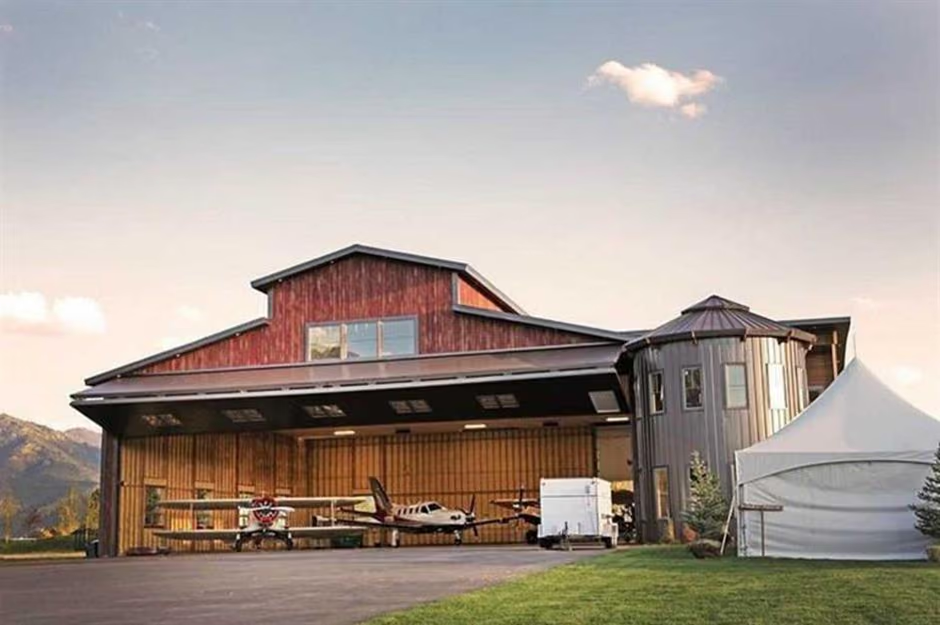

Four models, four different purchases
Colorado aviation properties generally fall into one of these. Establishing which one applies is the first question of the search, not a detail to resolve later.
Beside a public-use airport
The home sits off airport property with an agreement permitting aircraft access, commonly residential through-the-fence. The sponsor retains control of the airport; the homeowner owns separate residential land. The FAA does not require an airport to provide access merely because a property touches it.
Private resident-controlled airpark
The runway and common infrastructure are owned or controlled by an association, corporation or group of resident owners. A private airport that has not accepted federal assistance generally has greater latitude to set restrictions on visitors, hours, fees and aircraft.
Private-use airport, permission required
Use is limited to members, owners, invited guests, or pilots with prior permission. Verify that ownership actually includes the intended airport-use rights. Proximity to a private runway does not create permission to use it.
Individually owned runway or estate
The property includes a private runway, landing area, hangar complex or entire airport. Evaluation broadens to zoning, airport registration, land-use approval, maintenance, drainage, approach areas, neighbouring land, utilities, insurance, fire protection, and the cost of maintaining the operating surface.

Four Colorado communities, compared
These illustrate how different aviation communities can be. This is not a ranking or a complete inventory. Airport data, rules, availability and property rights should be verified at the time of purchase.
Erie Air Park
Adjacent to the Town-owned Erie Municipal Airport in the Denver–Boulder metro. The distinction that matters: the community sits beside a municipal airport, so both the residential property and the documents governing access must be evaluated.
- Airport
- EIK, public use
- Runway
- 4,700 ft concrete
- On field
- Fuel, instruction, rental
- Draw
- Boulder, Denver, I-25 access
Parkland Estates Airpark
A private fly-in community in Weld County near Erie and Boulder, describing multi-acre sites connected by aircraft taxi easements. A private runway raises a governance question: owners are not only users of the infrastructure, they may share responsibility for funding and maintaining it.
- Type
- Private fly-in community
- Runway
- 4,200 ft, paved and lighted
- Sites
- Multi-acre
- Review
- Taxi easements, reserves, assessments
Kelly Air Park (CO15)
A private residential aviation community with both airplane and glider operations. Suits an owner whose aircraft and flying profile align with it; less suitable for a buyer expecting unrestricted visitor access or an airport that functions like a municipal facility.
- Airspace
- Class G, no tower
- Operations
- Day VFR
- Lighting
- None on runway or taxiway
- Visitors
- Invited by a lot owner, briefed by a resident
Van Aire Skyport (CO12)
A private residential airpark east of Brighton with direct access to its runway and taxiway system from residential properties. Current information identifies it as private use, so access and permission should never be assumed from proximity alone.
- Runway 12/30
- 3,681 × 50 ft asphalt
- Status
- Private use
- Access
- From residential properties
- Review
- Membership rights, guest procedures

Compare the airport before the kitchens
Residential preferences matter, but the airport can eliminate a property before interior finishes ever do. A Colorado search should begin with the mission.
What to establish
Ownership and access
09- Who owns the runway
- Who controls airport use
- Public use or private use
- Whether prior permission is required
- Whether the property includes membership or ownership rights
- Whether access rests on an easement, licence, membership, lease or agreement
- How those rights transfer
- What fees and assessments apply
- What could suspend or terminate access
Runway and operations
09- Runway length, width, surface and condition
- Field elevation, slope and displaced thresholds
- Lighting and published approaches
- Weather reporting and fuel availability
- Snow removal and obstructions
- Traffic patterns and noise procedures
- Night and visitor restrictions
- Nearby controlled airspace
- Glider, parachute, helicopter or training activity
Understand the full cost of ownership
Low annual dues are not automatically a benefit if the runway, taxiways, drainage or lighting are underfunded. Higher dues are not automatically a problem if the community has a documented maintenance plan and adequate reserves. Review both current charges and the organisation's ability to fund future work.
Aviation-related expenses
Recurring
07- Airport-access fees
- Association dues
- Runway and taxiway maintenance
- Snow removal
- Common-area insurance
- Liability coverage
- Private-road maintenance
Capital and periodic
06- Pavement reserves
- Lighting and electrical systems
- Gate and security systems
- Drainage work
- Special assessments
- Improvements required by changing rules
Property-level
04- Hangar heating
- Hangar-door service
- Fire-protection improvements
- Fuel storage compliance where permitted
Review the association, not just the property
Colorado's Division of Real Estate advises reviewing both governing and financial records. There is no single central repository of association documents, which makes the association and seller important sources.
Governing
08- Declaration and amendments
- Bylaws
- Rules and regulations
- Airport operating rules
- Architectural standards
- Taxi-easement restrictions
- Voting structure
- Ownership and transfer requirements
Financial
05- Budgets and reserve information
- Financial statements
- Insurance
- Pending assessments
- Pending litigation
Operational
06- Meeting minutes
- Runway and taxiway maintenance plans
- Visitor rules and aircraft limitations
- Fuel and commercial-use restrictions
- Hangar-construction requirements
- Enforcement history
Buying a vacant airpark lot
A lot offers the chance to design the home and hangar around a particular aircraft, but buildability should be established before closing. A concept drawing is not an approved building plan. Zoning, association approval, airport approval, engineering, utilities and construction pricing all need investigating within contractual deadlines.
Establish before closing
Permission
06- Is a residence required before a hangar can be built?
- Can the hangar be built first?
- What are the setbacks and maximum hangar height?
- Are there architectural requirements?
- Is the planned door height permitted?
- Are cranes or tall structures subject to airport review?
Access and ground
05- Does a taxi easement reach the lot?
- Can the aircraft make every required turn?
- What pavement or apron must the owner construct?
- Who approves the airport connection?
- Can construction equipment use the taxi route?
Services and cost
05- Are water and sewer available, or is a well and septic required?
- What soils and drainage conditions exist?
- What fire-code requirements apply?
- What costs are due to the association or airport?
- Is temporary aircraft storage available during construction?