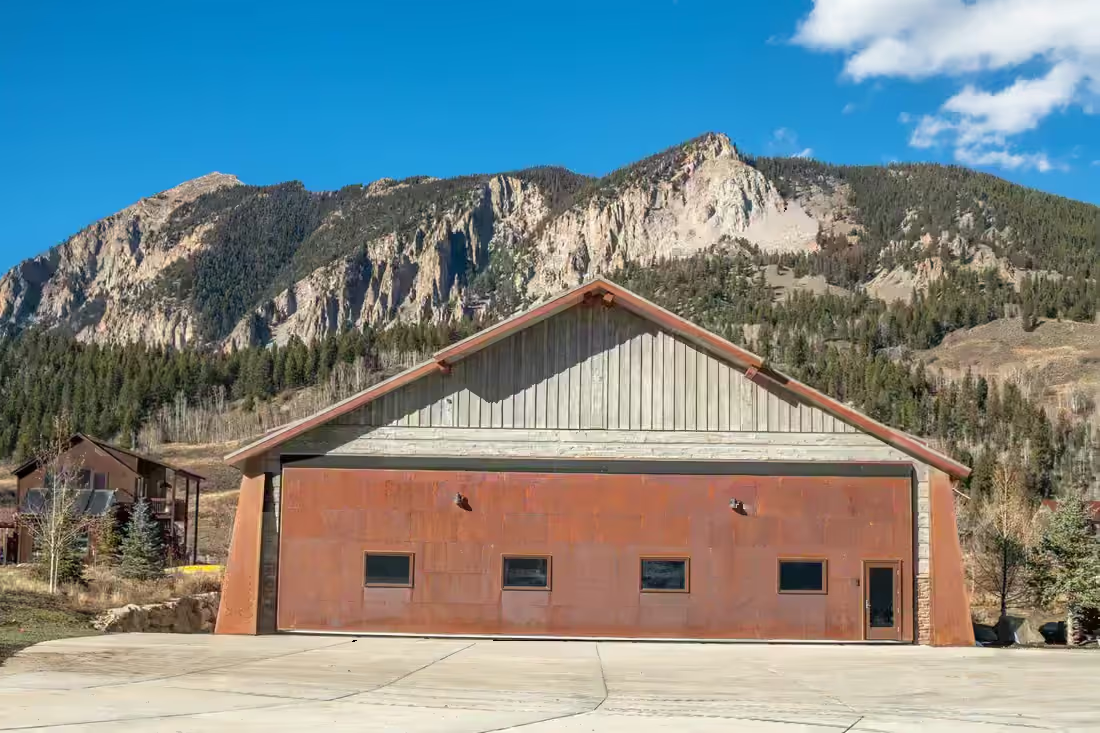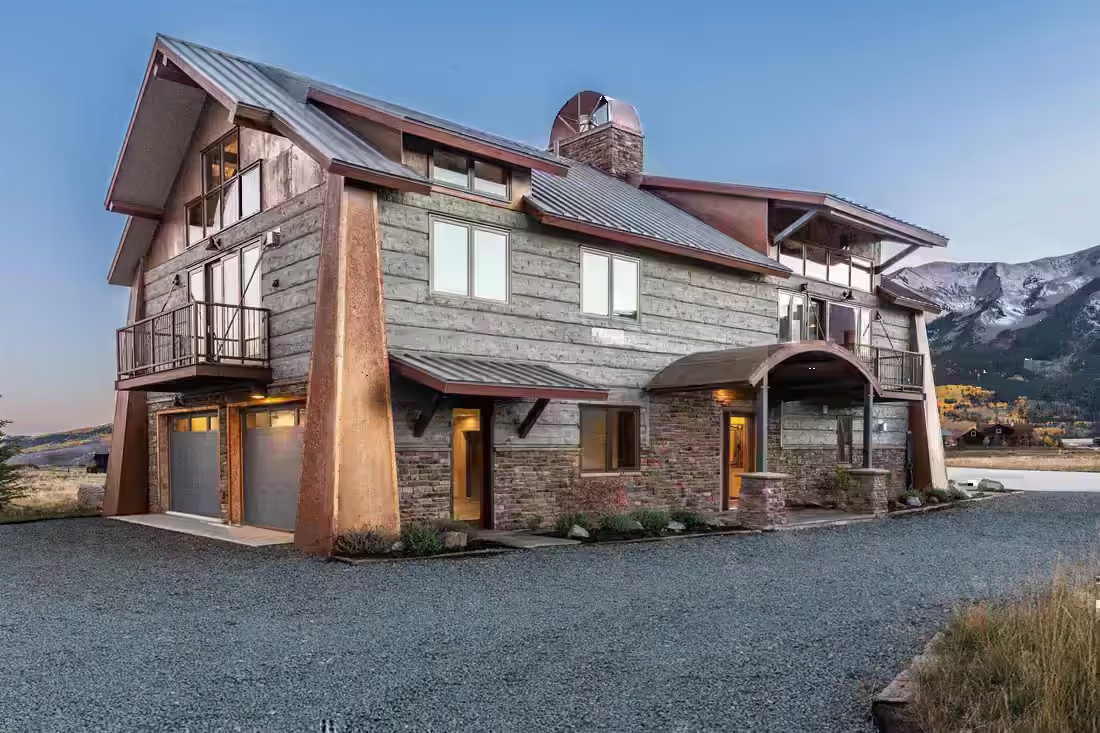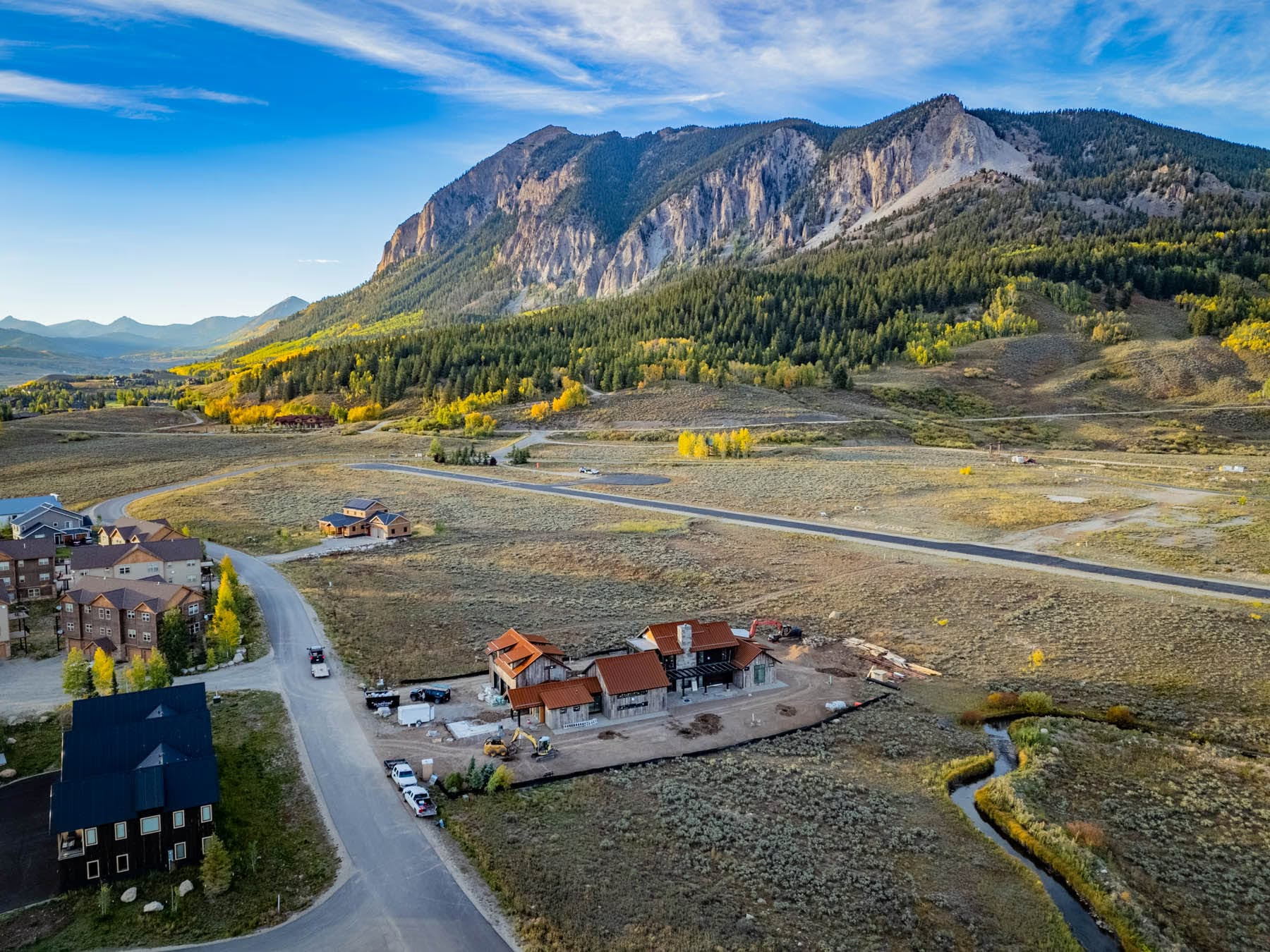
- What is it?
- A residential aviation community adjacent to Erie Municipal Airport in Erie, Colorado. The homes and the airport are separate legal properties.
- Public or private?
- The airport is public. Erie Municipal is a Town-owned, federally supported public-use general aviation airport.
- The runway
- Runway 16/34, 4,700 feet by 60 feet, concrete, with fuel, maintenance, instruction and rental on the field.
- How access works
- Aircraft reach the airport through a property-specific combination of recorded easements and a Town access agreement, license and fee. It does not come with the address.
- The largest buyer risk
- Assuming access is permanent because a seller has used it for decades. Access must be established from the documents and confirmed with the Town.
- Current listings
- Erie Air Park properties come to market unpredictably. See listings
Erie Air Park is a residential community adjacent to Erie Municipal Airport. The airport is owned and operated by the Town of Erie. The community does not own the public airport merely because individual homes may have aircraft access to it.
A buyer therefore needs to evaluate two connected but separate assets: the residence, land, hangar and title rights; and the agreement and physical route allowing an aircraft to enter Town-controlled airport property.
Erie Air Park can be an exceptional fit for a pilot who wants access to a longer paved runway, fuel, maintenance, flight instruction, aircraft rental, weather reporting and regional transportation. It also requires more legal and operational research than an ordinary residential purchase.
Jacob Baer brings a commercial pilot's and flight instructor's perspective to that process. He helps buyers define the aviation mission, evaluate the property, identify access questions, measure the hangar, organize documents, and coordinate the real estate decision with the appropriate legal, airport, insurance, lending, inspection and aviation professionals.
Buy the home, hangar and airport relationship with clarity
Jacob can help you compare the residence, hangar, access documents, airport, ownership expenses, financing, insurance and long-term resale before you commit.
Erie Air Park at a glance
Airport data
EIK
Town-owned public-use general aviation airport, non-towered
- Airport
- Erie Municipal Airport
- Identifiers
- EIK and KEIK
- Ownership
- Town of Erie
- Use
- Public-use general aviation
- Primary runway
- Runway 16/34
- Dimensions
- 4,700 x 60 ft
- Surface
- Concrete
- Control tower
- None (CTAF procedures)
- On-field services
- Fuel, rental, hangars, instruction, repair
- Location
- ~20 mi N of Denver, 3 mi W of I-25
- Community
- Residential, adjacent to the airport
- Access
- Property-specific; see below
Verified August 15, 2026 against FAA ADIP and the Town of Erie
Airport data, procedures, services and access terms change. Pilots must use current FAA publications, NOTAMs, weather, airport procedures and aircraft-specific performance data.
The difference between Erie Air Park and Erie Municipal Airport
The residential community and the airport are closely connected, but they are not one legal property.
The Erie Air Park Homeowners Association describes the neighborhood as an aviation community adjacent to Erie Municipal Airport. The Town owns the public-use airport, maintains the public airport relationship, establishes airport rules, manages airport planning, and administers applicable access and operating requirements.
A seller's historical use of the airport does not answer the questions that follow.
The distinct questions this creates for a buyer
The recorded right
05- Does the residential property have a recorded taxi or access easement?
- Does that easement reach the airport boundary?
- Who maintains the route from the hangar to the airport?
- Does access extend to tenants or guests?
- Can a buyer without an aircraft retain the right?
The Town's authorization
08- What separate Town agreement authorizes entry onto airport property?
- Does the agreement transfer automatically?
- Must the new owner apply for a new license?
- What access fee applies?
- Can the access right be suspended or terminated?
- What insurance is required?
- Which activities are prohibited?
- How will future Town or FAA requirements affect the arrangement?
A Town-owned public-use airport
Erie Municipal Airport is a federally supported public-use general aviation airport. That status differs from a private resident-controlled airpark. A private airpark can often limit access to owners and invited guests. A federally obligated public-use airport must operate within federal grant obligations and provide reasonable, nondiscriminatory access to qualifying aeronautical users.
Erie Air Park residents are therefore living beside an active public airport that serves a wider aviation community. The airport is not operated solely for the residential subdivision. This distinction affects airport traffic, flight training, visiting aircraft, maintenance activity, fuel services, public investment, future hangar development, noise expectations, airport planning and residential access agreements.
A buyer should value the convenience of a public airport while also understanding that residential owners do not control its complete operating future.
Runway and airport services
Current official information identifies the airport's principal concrete runway as 4,700 feet long; FAA data lists Runway 16/34 at 4,700 feet by 60 feet. The Town reports on-field services that include aircraft and hangar rental, flight instruction, aircraft repair and fuel sales.
Those services can support aircraft ownership, flight training, routine maintenance, local fuel availability, aircraft storage, weather awareness and visiting-pilot operations. Availability, operating hours, prices, fuel types, maintenance capability and rental inventory should be verified directly before relying on them.
Non-towered operations, and the noise that comes with an active field
Erie Municipal Airport operates without a control tower. Pilots remain responsible for traffic awareness, communications, right-of-way compliance, current procedures and safe integration with other aircraft. FAA Advisory Circular 90-66C provides current federal guidance for airports without an operating control tower. A residential owner should expect airport activity to include pilots with different aircraft, experience levels, missions and operating patterns.
Aircraft noise is an inherent part of living beside an active airport. The Town publishes voluntary noise-abatement procedures intended to reduce effects on surrounding communities while preserving flight safety; voluntary procedures do not give a homeowner authority to prohibit otherwise lawful aircraft operations.
Before purchasing, spend time at the property early in the morning, at midday and in the evening; on weekdays and weekends; in calm and windier weather; during active flight-training periods; and when neighboring hangars are in use. The objective is not to avoid airport activity. For many buyers, that activity is the reason to live there. The objective is to understand the actual environment before making a long-term residential decision.

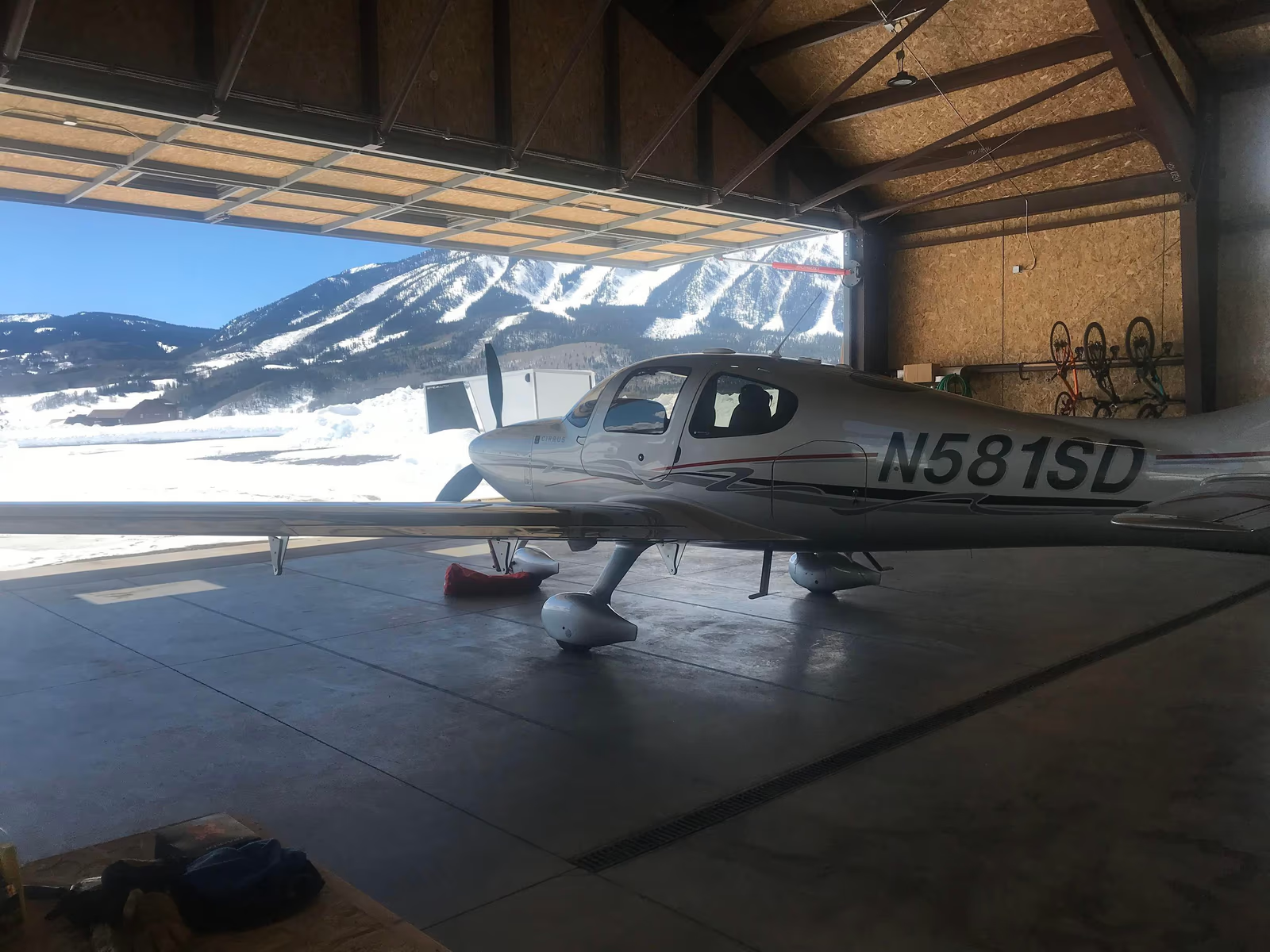
What residential through-the-fence access means
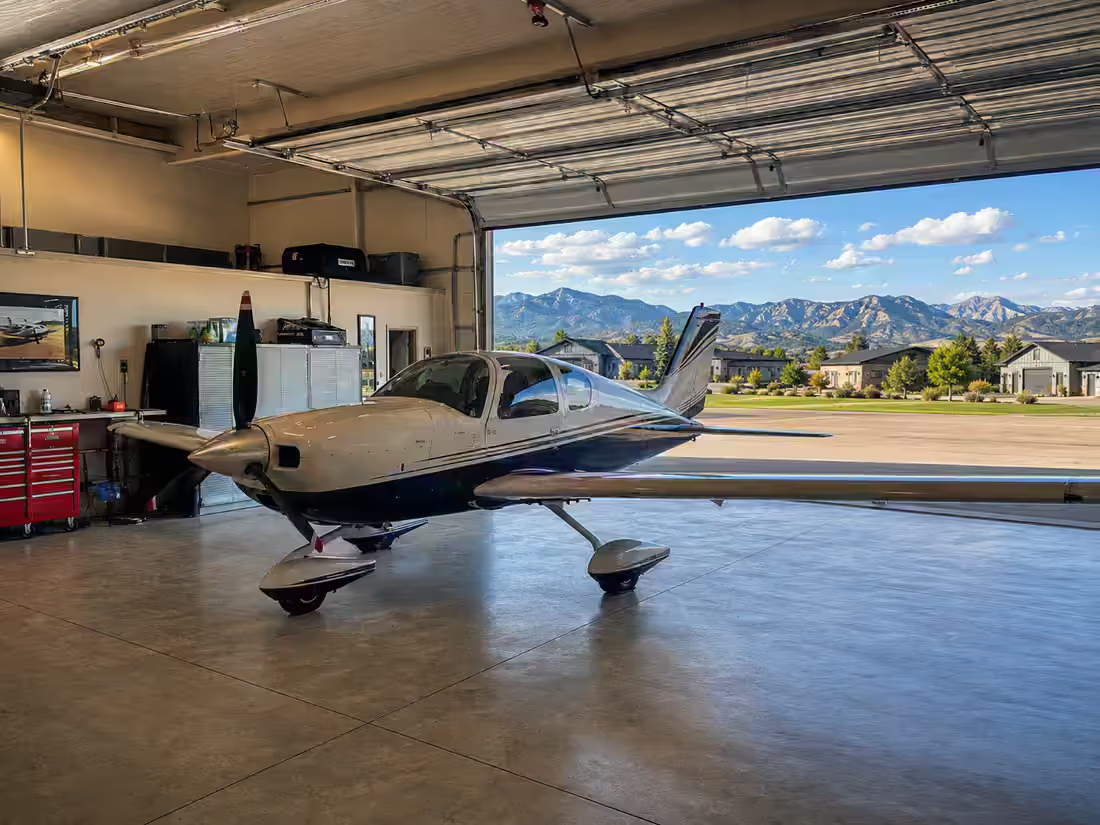
Residential through-the-fence access allows aircraft to move between residential property located outside an airport and the airport operating area. The term describes the legal and operational relationship. A literal fence is not required.
At a federally obligated general aviation airport, FAA guidance permits residential through-the-fence arrangements under defined conditions. At minimum, an acceptable agreement must address an access fee comparable to charges paid by on-airport users; the resident's responsibility for infrastructure required to reach the airport; residential and noncommercial use; a prohibition on access by third parties through the residential property; and a prohibition on aircraft refueling on the residential property.
These federal minimums do not replace Town-specific terms. Erie can impose additional reasonable requirements through its agreements, licenses, security measures, insurance provisions, fee schedules and airport rules.
Confirm before closing
The fee
07- Current annual or recurring fee
- Application charge
- Transfer charge
- Gate or credential charge
- Future fee-adjustment authority
- Payment deadline
- Consequences of nonpayment
The obligations
03- Insurance requirement
- Infrastructure responsibility
- Assessment or maintenance obligations
The documents that may control aircraft access
Depending on the property, review these. The title company and a qualified Colorado real estate attorney should explain what is recorded, what transfers, and what requires separate Town approval.
Title and land records
10- Deed
- Title commitment
- Title exceptions
- Subdivision plat
- Survey
- Recorded taxi easement
- Recorded access easement
- Maintenance agreement
- Avigation easement
- Airport-related notice
Town and airport records
11- Airport-access agreement
- Through-the-fence agreement
- Access license
- License application
- Assignment
- Transfer approval
- Fee schedule
- Insurance requirements
- Gate and security procedures
- Airport operating rules
- Suspension and termination provisions
Community records
06- Governing documents
- Architectural requirements
- Association meeting records
- Community maps
- Historical access information
- Dispute records affecting the property
Questions the access agreement should answer
An aviation-property purchase should not proceed on the assumption that access is permanent merely because it has been used for decades.
Who and how long
07- Who is legally authorized to use the access?
- Is the right limited to the property owner?
- Can a spouse, household member, tenant or guest use it?
- Does it transfer automatically when the property is sold?
- Must the buyer execute a new agreement?
- Is Town approval discretionary?
- Is the agreement perpetual or time limited?
Default and termination
04- Can it be terminated without a property default?
- What constitutes default?
- Is there a cure period?
- What happens if airport construction interrupts the route?
Money and maintenance
05- What insurance is required?
- Who maintains the gate?
- Who maintains the taxi route?
- Who pays for improvements required by the Town or FAA?
- Can the fee be changed?
What is prohibited
04- Is commercial activity prohibited?
- Is aircraft maintenance restricted?
- Is aircraft refueling prohibited?
- Are aircraft-registration records required?
Measure clear space, not advertised space
The overall building dimensions do not establish whether an aircraft will fit. Mechanical equipment, cabinets, support columns, door tracks, storage and work areas can reduce usable space.
The aircraft should be compared with verified measurements and manufacturer specifications. A listing should never guarantee compatibility with a specific aircraft.
Verify the hangar as a functional aviation structure
Clearances
12- Hangar-door clear-opening width
- Hangar-door clear-opening height
- Clear interior width
- Clear interior depth
- Lowest ceiling obstruction
- Tail clearance
- Wingtip clearance
- Propeller clearance
- Turning area
- Apron dimensions
- Door-to-taxiway distance
- Clearances along the complete aircraft route
Systems to inspect
12- Foundation and slab
- Roof and exterior
- Drainage and water intrusion
- Door structure, motor and controls
- Manual or emergency door operation
- Electrical capacity and lighting
- Heating, ventilation and insulation
- Plumbing and floor drains
- Fire protection
- Attached office, workshop, storage
- Permit history and approved use
- Environmental conditions
Walk the entire route from the hangar to the airport
A route suitable for one aircraft may not work for a wider, longer, heavier or less maneuverable aircraft. Confirm who maintains each section and who pays when resurfacing, drainage, gate work, widening or other improvements become necessary.
Geometry and surface
07- Taxi easement width
- Turns
- Apron slope
- Surface changes
- Wingtip clearance
- Tail clearance
- Night visibility
Obstacles and conflicts
08- Road crossings
- Gates and fences
- Signs, mailboxes, utility boxes
- Ditches and drainage
- Snow-storage areas
- Landscaping
- Vehicle conflicts
- Pedestrian activity

Property systems and land-use questions
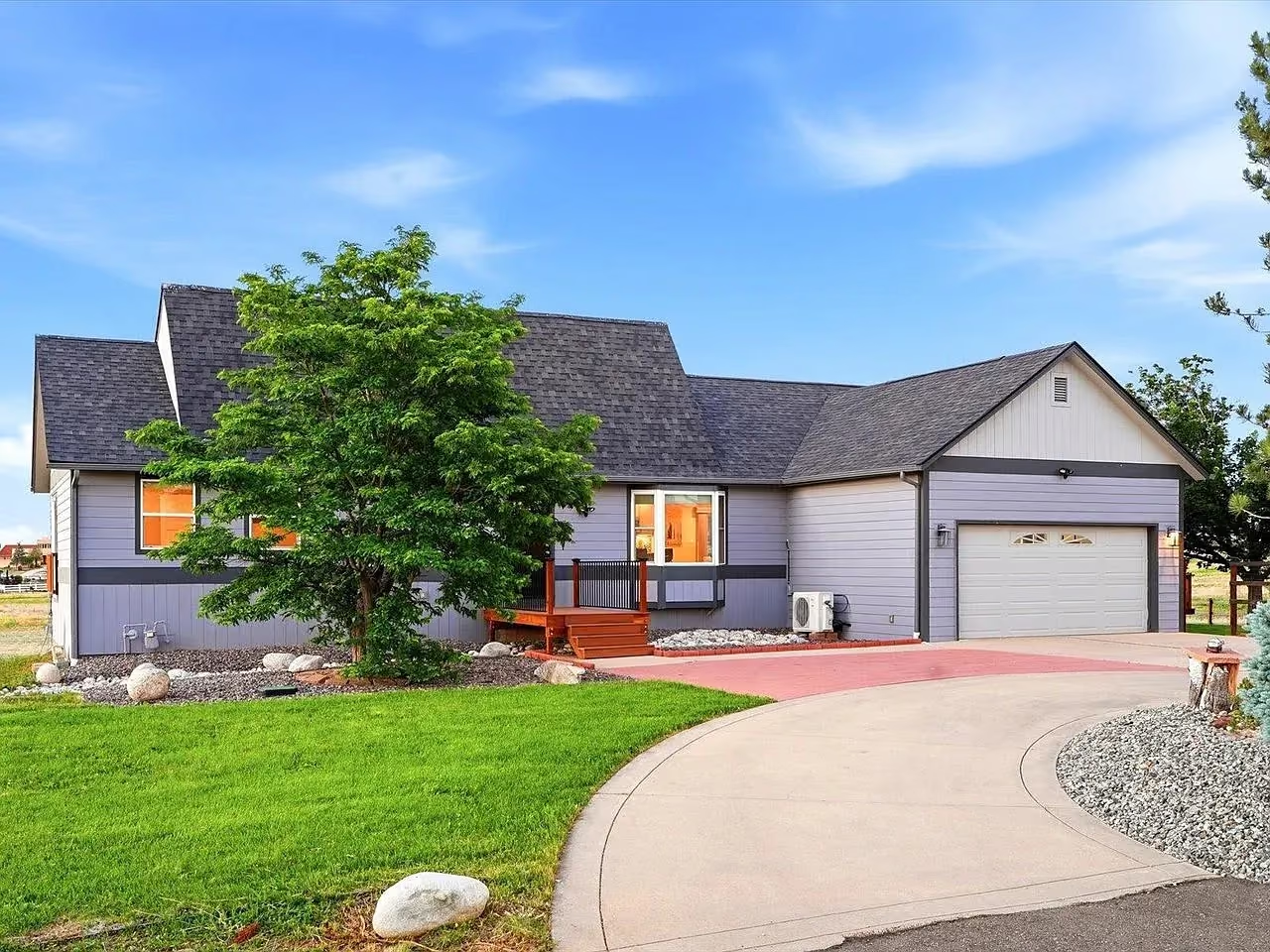
Erie Air Park developed over several decades. Properties can differ in age, improvement history, hangar configuration, access, utilities and permit records.
The community's historical account explains that early homes were developed when Town water was available but sewer and natural-gas infrastructure were limited. Current systems must therefore be confirmed for the exact parcel rather than inferred from the neighborhood name.
Do not assume that an open portion of a lot can accommodate a new hangar without Town, association, utility, fire, drainage and airport review.
Investigate for the exact parcel
Utilities
06- Public water
- Sewer or septic
- Natural gas
- Electrical capacity
- Internet
- Drainage
Land and permits
11- Lot boundaries
- Hangar permits
- Outbuilding permits
- Addition permits
- Approved property use
- Aircraft-access route
- Fencing restrictions
- Future expansion
- Airport-overlay or height restrictions
- Association review
- Town zoning
Airport planning and future change
Erie updates its airport planning periodically and has pursued strategic planning concerning airport operations, financial sustainability, land use, hangar development and economic activity. The Town describes its airport plan as a long-range framework, and its 2023 strategic business work included consideration of through-the-fence access agreements and airport financial self-sufficiency.
The airport should not be valued on the assumption that its current physical appearance and operating pattern will remain unchanged forever.
Review current information on
The airfield
07- Airport master planning
- Hangar proposals
- Taxiway projects
- Runway maintenance
- Pavement funding
- Fuel planning
- Noise procedures
The Town
06- Adjacent commercial development
- Access fees
- Airport-board agendas
- Town Council decisions
- Residential access policy
- Surrounding road projects
Buying an Erie Air Park home
Define the aviation mission
Current and future aircraft; wingspan, tail height, length and weight; hangar-door requirement; VFR or IFR; day or night; fuel preference; maintenance and training needs; passenger load; typical destinations; ground commute; expected ownership period.
Define the residential mission
Home size, architecture, lot, privacy, views, office, guest space, garage, workshop, storage, renovation tolerance, accessibility and maintenance expectations.
Verify access before relying on it
Request the title, easements, Town agreement, fee schedule, transfer requirements, insurance terms and route information early.
Measure the hangar and route
Do not wait until after the inspection deadline to discover an aircraft-fit problem.
Review airport and Town plans
Determine whether current or proposed projects affect the property, access route, noise environment, view or long-term utility.
Investigate financing and insurance
Aviation properties can raise appraisal and underwriting questions involving hangar value, unusual improvements, limited comparable sales, the access agreement, septic systems, acreage, workshop activity, aircraft storage, fire protection and replacement cost.
Preserve future resale
A property should serve the current aircraft mission without becoming unnecessarily difficult for the next qualified buyer to understand, finance, insure or use.
Questions to answer before making an offer
Access
09- What document establishes access?
- Does the document reach airport property?
- What Town authorization is required?
- Is the access transferable?
- What fees apply?
- What insurance is required?
- Who maintains the route?
- Can access be suspended or terminated?
- What activities are prohibited?
The hangar and lot
07- What are the verified hangar dimensions?
- What is the verified door opening?
- Can the aircraft complete every turn?
- Is the hangar permitted?
- Is the intended use permitted?
- What utilities serve the property?
- Are there unpermitted additions or outbuildings?
The long view
04- Are current airport projects planned?
- Is the home financeable on acceptable terms?
- Is the complete property insurable?
- What documentation will a future buyer expect?
Selling an Erie Air Park property
Aviation buyers need more information than an ordinary residential listing provides. Prepare title information, access easements, the current Town access agreement, current fee information, insurance requirements, hangar plans, permit records, verified door and interior dimensions, an aircraft-route map, an airport summary, current airport-resource links, utility information, association information, improvement records, and included and excluded equipment.
The listing should distinguish among: located beside Erie Municipal Airport; documented taxi easement; Town-authorized airport access; private hangar; potential hangar site; and current through-the-fence agreement. These statements are not interchangeable.
Selling an aviation property
How Jacob positions hangar homes, access rights and a smaller buyer pool, and the documents a qualified aviation buyer will ask for first.
Erie Air Park homes for sale
Erie Air Park properties may not become available on a predictable schedule. Jacob can establish a focused search, monitor public inventory, review relevant professional opportunities, and prepare the access and hangar checklist before a suitable home reaches the market.
Erie Air Park frequently asked questions
Buy the home, hangar and airport relationship with clarity
An Erie Air Park property should support both the household and the aircraft mission. Jacob can help you compare the residence, hangar, access documents, airport, ownership expenses, financing, insurance and long-term resale before you commit.