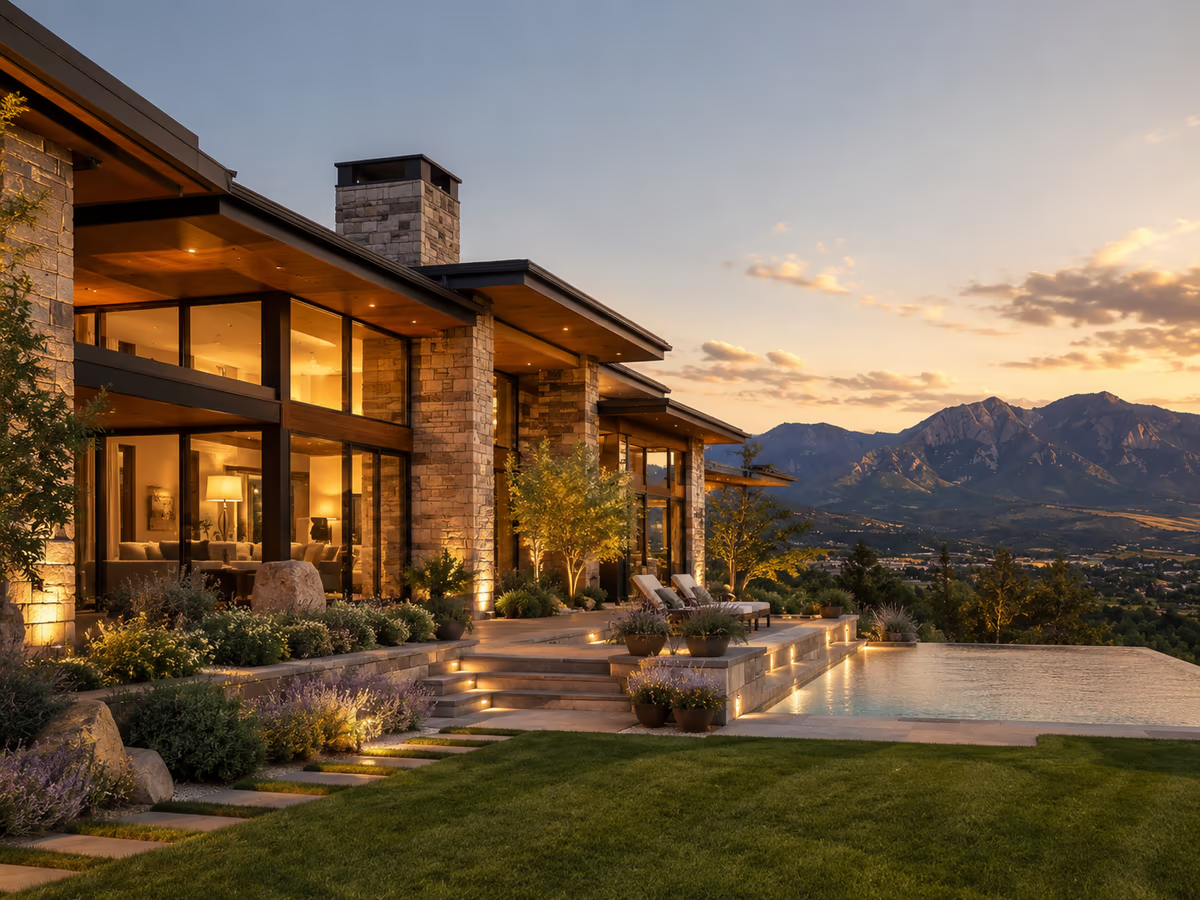
What is this guide about?
How to price, prepare, position, market, show, and negotiate the sale of a Boulder County luxury home or estate. A luxury property should not be sold as a conventional home with additional photography, because the seller is asking the market to recognize value in a property that may be difficult to compare.
Who is it for?
Owners of properties that may be expensive to operate, highly customized, privately located, architecturally important, or supported by specialized land and systems. That includes homes with a guest residence, wellness spaces, equestrian improvements, aviation access, or a relationship to adjoining open space.
What is the most important conclusion?
The strongest campaign does not make the loudest claim. It gives the right buyer a clear reason to value the property, enough evidence to trust the presentation, and a well-managed path to completing the purchase. Private marketing does not automatically produce a higher price, and construction cost is not automatic market value.
What should you do next?
Complete a private property and strategy review before beginning major preparation or public marketing. The seller's objective should be written down before the property is priced.
What the strategy must answer
Five questions come before the price. Every step further down this page is one of the five being worked out in detail.
The property and its buyer
03- What makes the property valuable?
- Which buyer is most likely to recognize that value?
- What evidence will that buyer require?
The campaign and the terms
02- How should the property be priced and exposed?
- Which terms protect the seller's outcome?
Boulder County as the second half of 2026 opened
Boulder County, as the second half of 2026 openedCompiled August 12, 2026
Current commentary from the Colorado Association of REALTORS warns that sellers relying on prior appreciation or unsupported expectations are experiencing long market periods or unsuccessful listings.
Pace and pricing
- Average time to sell
- About 63 days
- Prices
- Broadly stable
What the commentary warns
- Listings priced on prior appreciation or unsupported expectations
- Long market periods or unsuccessful listings
These are whole-market figures for Boulder County. They are not broken out by price band, property type, or submarket, and an average time to sell describes a market rather than any one luxury property.
Steps 1 to 3: what is decided before a price exists
The first three steps produce a written objective, an argument for the property, and the file that proves the argument. None of them require a number.
Define the seller's actual objective
A seller may prioritize highest supportable net proceeds, certainty, privacy, limited disruption, fast closing, extended possession, coordination with another purchase, sale of furnishings, estate planning, entity or trust requirements, international timing, staff transition, or security. The objective should be written before the property is priced. A strategy designed only to maximize the headline price may fail when carrying cost, concessions, risk, or timing is included.
Establish the property thesis
State why the home is difficult to reproduce: architecture, a recognized designer or builder, land, views, privacy, historic importance, construction quality, restoration, a guest residence, wellness spaces, equestrian improvements, aviation access, an open-space relationship, location, new construction, complete systems, or a rare combination of features. Every major marketing claim should be supported by evidence.
Build the evidence file
A complete file can reduce uncertainty before it becomes negotiation leverage for the buyer. The documents it should contain are set out below.
The evidence file
Assemble this before the property is exposed, not after a buyer asks. Not every line applies to every property.
Title, land, and permission
09- Deed
- Survey
- Site plan
- Permits
- Final approvals
- Historic approvals
- Conservation documents
- Water rights
- Association records
Design and construction record
06- Floor plans
- Architect
- Builder
- Design records
- Renovation history
- Landscape plan
Systems, service, and coverage
09- System specifications
- Warranties
- Service records
- Energy information
- Smart-home documentation
- Pool records
- Well and septic records
- Aviation agreements
- Insurance information where appropriate
Steps 4 to 6: what it is worth and how it is readied
Valuation, launch position, and preparation are one decision taken in three parts. Changing any of them changes the other two.
Value the property as a complete asset
Weigh micro-location, land, privacy, architecture, condition, construction, natural light, layout, views, guest improvements, garage, hangar, outdoor living, systems, operating cost, restrictions, current competition, closed sales, buyer depth, appraisal support, and replacement difficulty.
Select the right launch position
A market-supported launch prices within the strongest current evidence. A competitive launch takes a deliberate price position to create broader attention and possible competition. An aspirational launch prices above the strongest evidence because the property may attract a scarcity premium, and it carries greater risk of lower activity, longer market time, price reductions, appraisal difficulty, greater carrying cost, and reduced buyer urgency.
Prepare the property without removing its character
Preparation can include repairing active issues, servicing systems, improving lighting, editing furnishings, deep cleaning, window cleaning, landscape work, organizing garages and specialty spaces, staging key rooms, documenting technology, securing collections, completing unfinished work, resolving permit questions, and improving arrival. Present the property clearly rather than turning distinctive architecture into a generic interior.
Steps 7 to 9: how the property is shown to the market
Media, words, and reach. The third of these is a formal choice with policy attached, and it is set out in full below the block.
Create the media around the buyer's questions
Consider daylight photography, twilight photography, aerial photography, a property film, floor plans, a site plan, architecture details, land, views, systems, guest spaces, garages, hangar, landscape, and regional context. Images should be accurate. Media should not create nonexistent views, altered architecture, misleading room dimensions, invented landscaping, false boundaries, or artificial improvements.
Write a property-specific narrative
Avoid interchangeable luxury language. Explain setting, arrival, architecture, materials, natural light, circulation, principal rooms, private spaces, guest accommodations, indoor and outdoor connection, systems, land, storage, vehicles, aircraft, regional location, and ownership experience. Instead of declaring that a property offers exceptional indoor-outdoor living, explain how doors, terraces, orientation, kitchen placement, shelter, views, and seasonal conditions create it.
Choose the marketing exposure
Three options are available, and each trades audience against privacy in a different proportion. Private does not automatically mean more valuable.
Two of the three options are governed by policy
Delayed marketing can place the property within the MLS while postponing public IDX display and syndication for a locally defined period. The National Association of REALTORS states that current policy requires informed written seller consent and leaves the available delayed period to local MLS rules.
An office exclusive generally limits exposure to the listing brokerage and is not publicly marketed. The National Association of REALTORS sets the option out in its handbook on multiple listing policy. Choosing it may protect privacy but can reduce buyer awareness, competition, and price discovery.
The three exposure options
Compare them against the objective written in step 1, not against a preference for privacy in the abstract.
Full public marketing
09- Broadest audience
- Greater buyer awareness
- Stronger price discovery
- More buyer-agent exposure
- Greater potential competition
- Limitation: less privacy
- Limitation: public market history
- Limitation: broader media distribution
- Limitation: more showing requests
Delayed marketing
04- Can place the property within the MLS while postponing public IDX display and syndication
- Runs for a locally defined period
- Requires informed written seller consent under current NAR policy
- The available delayed period is left to local MLS rules
Office exclusive
06- Generally limits exposure to the listing brokerage
- Not publicly marketed
- May protect privacy
- Can reduce buyer awareness
- Can reduce competition
- Can reduce price discovery
Steps 10 to 12: who is reached, who is let in
Distribution, access, and the honest reading of what comes back. The middle step is where a luxury sale stops resembling a conventional one.
Reach qualified buyers directly
Distribution can include MLS distribution, a dedicated property website, the brokerage network, direct broker outreach, relocation, luxury-property platforms, email, search advertising, social video, print, public relations, architecture channels, equestrian channels, aviation channels, and regional and national referral relationships. Distribution should follow the likely buyer rather than one fixed package.
Protect privacy and security
A showing protocol decides who reaches the property and under what conditions. Qualification should be related to the transaction and applied consistently.
Measure serious interest
Watch qualified inquiries, buyer-agent calls, repeat visits, second showings, adviser visits, document requests, video engagement, property-page engagement, feedback patterns, competing listings, pending comparables, and offer activity. Large impression counts are less meaningful than evidence that qualified buyers are advancing.
What a showing protocol may address
Set this before the first showing, and apply it to every buyer the same way.
Who is admitted
04- Advance notice
- Buyer qualification
- Proof of funds where appropriate
- Accompanied access
The building's own security
06- Gate security
- Alarms
- Cameras
- Restricted areas
- Staff spaces
- Post-showing security
Contents to secure before access
08- Aircraft
- Vehicles
- Art
- Wine
- Firearms
- Medication
- Documents
- Photographs
Steps 13 to 15: choosing, verifying, handing over
The last three steps decide what the seller actually receives, which is rarely the number on the front of the offer.
Compare offers by net, risk, and certainty
Compare price, financing, proof of funds, appraisal, inspection, title, survey, attorney review, concessions, personal property, closing, possession, confidentiality, entity approval, sale contingency, and probability of performance. A lower price can create a stronger result when it offers better net, fewer contingencies, stronger capacity, lower appraisal risk, better possession, or more reliable closing.
Prepare for appraisal and inspection
Assemble architect information, builder information, plans, permits, system records, land details, comparable sales, improvement history, specialist inspections, engineering, water and septic, insurance, and historic or conservation documents. The appraiser and the buyer's professionals remain independent. The seller's task is to provide accurate, organized information.
Manage the ownership transition
Complex systems should not be transferred through a handwritten list created on the morning of closing. Organize the handover before closing, item by item, as set out below.
Organize the handover before closing
The last group is the one that turns into a dispute if it is left to closing morning.
Access and control
06- Keys
- Gate controls
- Alarm
- Smart-home administration
- Cameras
- Aircraft access
Systems and the people who service them
09- Service providers
- Warranties
- Manuals
- Pool
- Generator
- Solar
- Landscape
- Wine systems
- Elevator
What actually conveys
04- Association
- Included property
- Excluded property
- Possession
Seller questions
What the strongest campaign does
The strongest campaign does not make the loudest claim. It gives the right buyer a clear reason to value the property, enough evidence to trust the presentation, and a well-managed path to completing the purchase.
Start with the review, not the photography
Complete a private property and strategy review before beginning major preparation or public marketing.