What is this guide about?
It is a market report for high-value Boulder County homes, built on June 2026 data with July 2026 commentary. It sets out how the luxury segment is defined and measured, how the county's submarkets differ, what determines luxury marketability, and what current conditions mean for a high-value seller or buyer.
Who is it for?
Owners of high-value Boulder County property who are considering a sale, and buyers comparing expensive homes across central Boulder, the foothills, the plains estates, the eastern communities, and northern Boulder County. Both groups need to know whether a countywide statistic describes the property in front of them.
What is the most important conclusion?
There is no permanent universal price threshold for luxury, and a countywide figure is not a reading of the luxury segment. A luxury conclusion requires current high-value sales and inventory to be extracted separately for the relevant geography and property class.
What should you do next?
Ask for the private version for one property. A private report can define the property's competitive set, likely buyer, price position, preparation needs, operating concerns, and marketing strategy.
Why this report carries two definitions at once
Luxury analysis should account for geography, property type, architecture, land, views, privacy, construction, condition, specialty improvements, buyer depth, price range, market time, and resale audience.
This report uses both a percentile-based definition and fixed price bands so high-value properties can be compared consistently without pretending every expensive home competes in the same market.
The luxury threshold moves with the market
The primary luxury definition is the top 10 percent of closed residential sales within the selected geography and property class over the preceding 12 months. This threshold adjusts as the market changes.
Fixed price bands are reported alongside it. They are reporting bands rather than declarations that every property within them offers the same quality or scarcity.
How the segment is cut
One cut by price, one cut by kind of property. Property classes are reported separately only where sample size permits.
Fixed reporting bands
04- $1.5M to $1.999M
- $2M to $2.999M
- $3M to $4.999M
- $5M and above
Property classes, where sample size permits
07- Detached single-family homes
- Condominiums and townhomes
- Foothill and mountain estates
- Acreage and rural-residential properties
- Historic and architectural homes
- New construction
- Aviation properties
What each edition measures
Supply and activity
06- Active listings
- New listings
- Pending properties
- Closed sales
- Months of supply
- Median days on market
Price
04- Median sale price
- Average sale price
- Sale-to-list relationship
- Original price compared with final sale price
Negotiation and financing
03- Price reductions
- Seller concessions
- Cash and financed transactions
What the county figures do and do not say
The broader Boulder County market entered the second half of 2026 with relatively flat pricing and an average sale period near 63 days, according to current commentary from the Colorado Association of REALTORS. That measured pace makes property-specific execution especially important for luxury sellers. Buyers have time to compare architecture, condition, land, systems, insurance, operating costs, and value before deciding.
Through June 2026, Boulder County's single-family median sale price was $850,000 while the average was approximately $1.087 million, according to the MarketStats Reports county report. The spread between median and average is consistent with a market containing substantial high-value sales, but it is not itself a measure of luxury-market performance.
Boulder County context
June 2026 closed sales, with July 2026 commentaryCompiled August 14, 2026
Printed as orientation, not as a reading of the luxury segment. Every figure below covers the countywide single-family market at every price.
Single-family, through June 2026
- Median sale price
- $850,000
- Average sale price
- Approximately $1.087 million
Countywide commentary, July 2026
- Average sale period
- Approximately 63 days
- Pricing entering the second half of 2026
- Relatively flat
These are countywide single-family figures, not luxury-segment figures, and the spread between the median and the average is not itself a measure of luxury-market performance. The pace and pricing lines come from Colorado Association of REALTORS commentary on the July market rather than from the June county report.
Five submarkets, five different questions
A price that represents a luxury purchase in one Boulder County community may represent a different market position in another. What creates the value differs, and so does what has to be verified.
City of Boulder
Value may derive from micro-location, walkability, foothill proximity, views, historic architecture, modern design, larger lots, open-space access, privacy within city limits, new construction, and renovation quality. Due diligence may include floodplain, historic review, zoning, addition potential, permit history, insurance, and view protection.
Boulder foothills and mountain estates
Privacy, views, larger parcels, custom architecture, guest structures, forested land, and immediate recreation access. Ownership analysis should include wildfire, insurance, road access, well, septic, propane, internet, geology, drainage, snow, and emergency response.
Niwot and unincorporated plains estates
Land, privacy, architecture, outbuildings, equestrian use, water systems, irrigation, county development restrictions, and access to Boulder and Longmont.
Louisville, Lafayette, Superior, and Erie
Rebuilt homes, new construction, larger planned-community homes, Old Town properties, golf-oriented settings, aviation properties, and custom residences. Analysis should distinguish county, municipality, association, district, builder, construction history, and surrounding development.
Longmont and northern Boulder County
Historic residences, larger city homes, new construction, acreage, rural-edge property, equestrian improvements, guest structures, and specialized garages or workshops.
Compare the property, not the county
A luxury conclusion requires current high-value sales and inventory to be extracted separately for the relevant geography and property class.
What determines luxury marketability
A qualified buyer should understand why the property is difficult to reproduce. That is the property thesis, and everything else in a luxury sale is evidence for it.
Luxury buyers frequently request the records that support the thesis, and they price the cost of running the property before they decide.
The thesis and the file behind it
Why the property is difficult to reproduce
12- Architecture
- Land
- Location
- Privacy
- Protected surroundings
- Construction quality
- Guest accommodations
- Equestrian facilities
- Aviation access
- Views
- Historic significance
- A rare combination of features
Records luxury buyers request
13- Plans
- Permits
- Builder information
- Architect information
- System specifications
- Warranties
- Service history
- Landscape plans
- Smart-home documentation
- Energy records
- Water and septic information
- Access agreements
- Association documents
Scarcity and demand are not the same measurement
A highly specialized improvement can increase value for a small group while narrowing the broader buyer pool. Luxury valuation should consider both scarcity and demand.
Operating cost
The cost of owning the property is part of what a luxury buyer is deciding, and it is separate from the price.
Recurring and contractual
04- Property taxes
- Insurance
- Utilities
- Association costs
Land, systems, and service
10- Landscaping
- Snow removal
- Pool
- Smart-home support
- Security
- Private roads
- Well and septic
- Mechanical systems
- Staffing or caretaking
- Capital replacement
Aspirational pricing carries more risk in a measured market
Current Boulder County commentary from the Colorado Association of REALTORS emphasizes that unsupported seller expectations are leading to longer market periods or failed sales.
That warning is especially relevant to high-value homes, because the buyer pool is smaller and comparable properties are less uniform.
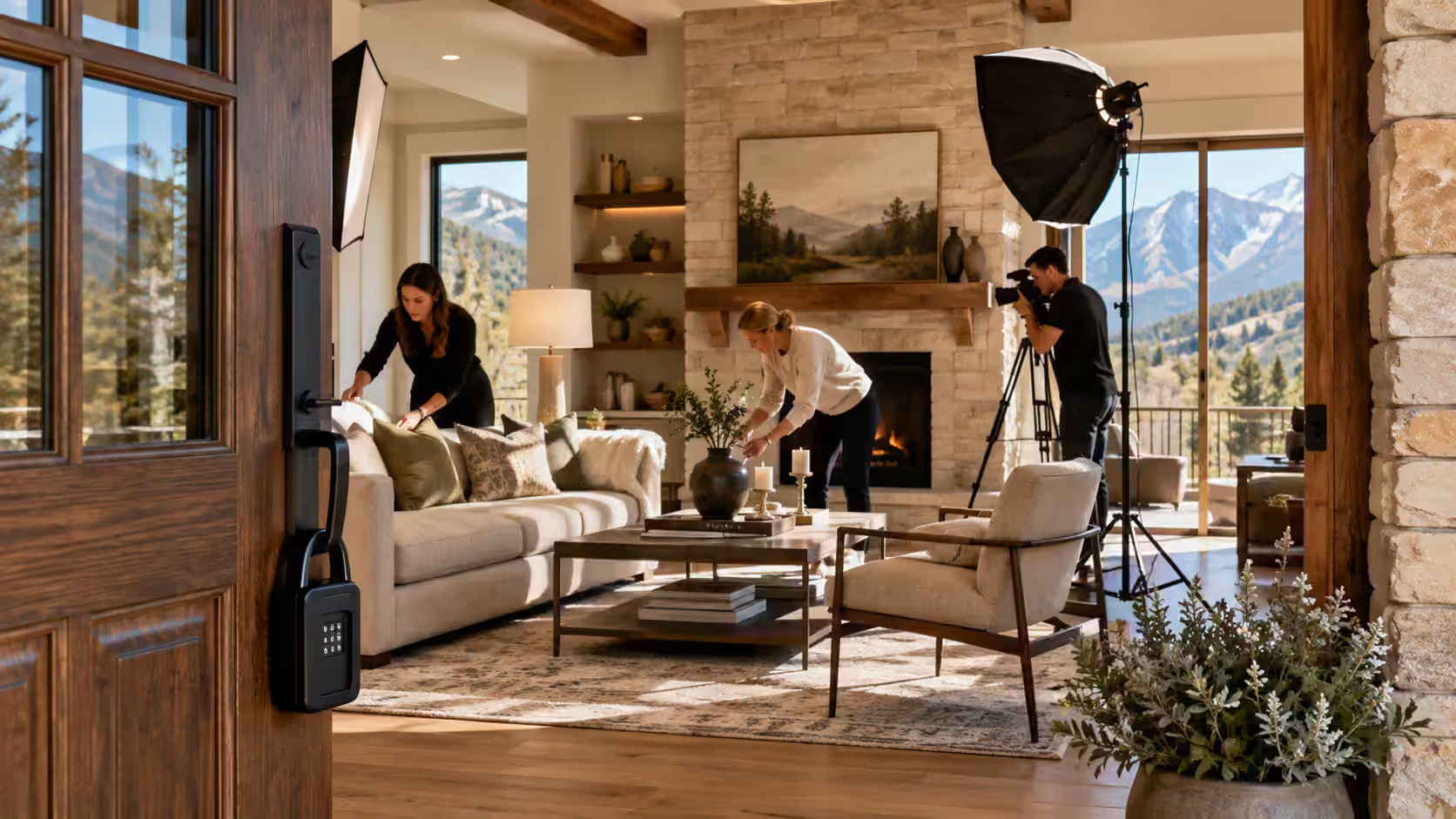
Presentation must explain the price
What a buyer sees
04- Architectural photography
- Complete property film
- Floor plans
- Site context
What a buyer reads
04- Detailed specifications
- Accurate land information
- Property-specific narrative
- Dedicated property page
How a buyer gets access
02- Document-request process
- Controlled showing plan
Before the property reaches the market
A private report can define the property's competitive set, likely buyer, price position, preparation needs, operating concerns, and marketing strategy.
A high price does not guarantee quality
More time can improve due diligence, but only on the questions a buyer actually asks. The measured pace of the wider market is an opportunity to investigate the property rather than a reason to relax the standard applied to it.
Where the extra time goes
What more time can improve
10- Construction
- Systems
- Insurance
- Land
- Water
- Permits
- Renovation feasibility
- Operating cost
- Appraisal
- Resale
What to verify on a high-priced home
11- Construction method
- Permit history
- Building envelope
- Mechanical systems
- Smart-home support
- Water and wastewater
- Access
- Insurance
- Historic or conservation restrictions
- View protection
- Association finances
Buying at the top of the market
A luxury purchase should be measured against the correct market segment rather than a countywide average.
What the monthly module reports
Each edition carries a luxury data module. It reports the current luxury threshold alongside the inventory, activity, pricing, and negotiation figures for the segment, and the same module repeats for each submarket.
The luxury data module
Threshold and inventory
05- Current luxury threshold
- Active luxury inventory
- New luxury listings
- Pending luxury properties
- Months of supply
Sales and pricing
05- Closed luxury sales
- Median and average price
- Median price per square foot
- Highest public sale
- Median days on market
Negotiation and terms
04- Price reductions
- Seller concessions
- Cash-sale percentage
- Original-to-final price relationship
Repeated for each submarket
08- City of Boulder
- Boulder foothills
- Niwot and unincorporated plains
- Louisville, Lafayette, and Superior
- Erie
- Longmont
- Mountain communities
- Aviation properties
Aviation properties are reported separately
Aviation properties appear in this report both as their own property class and as their own submarket.
Questions about the luxury market
What a luxury report is for
A luxury report should not create false precision from a small number of unrelated homes.
The strongest analysis identifies the correct market segment, explains the differences among the properties, and connects the data to the owner's or buyer's actual decision.
Ask for the private version
Jacob can analyze one luxury property against its actual competitive set rather than against a countywide statistic.