


What is this guide about?
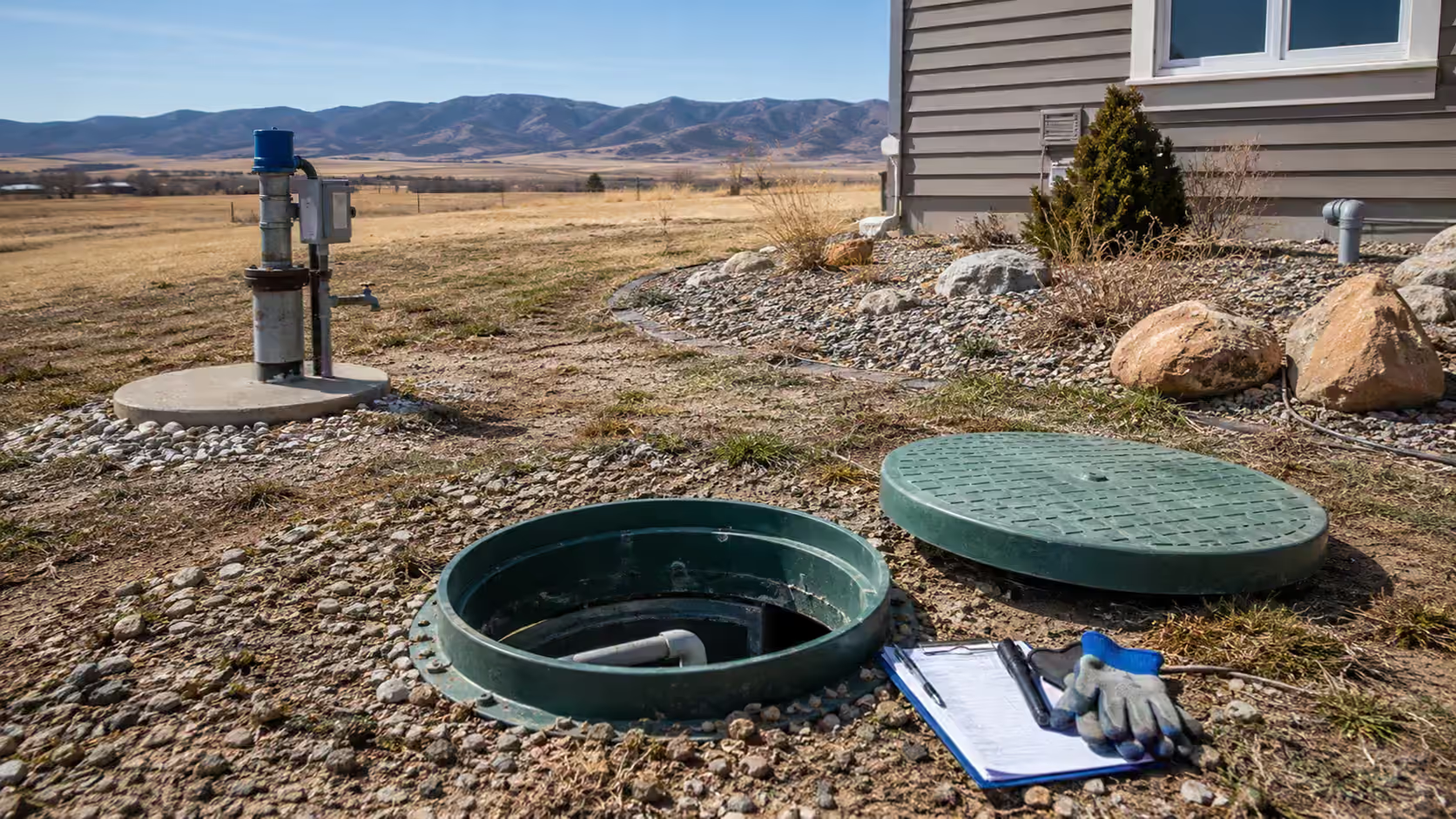
Four property questions that arrive together in rural, foothill, acreage, and mountain transactions and are then treated as one subject: radon, a private well, a septic system, and water rights. Each has its own documents, its own professionals, and its own way of failing.
Who is it for?
Buyers and sellers of Boulder County property served by a private well or an onsite wastewater treatment system, and anyone weighing an acreage, foothill, or mountain home where those systems come with the land. Sellers have a preparation list of their own further down the page.
What is the most important conclusion?
These are four investigations, not one. A well permit does not guarantee a particular production rate, a passing septic transfer inspection does not guarantee that the system will never fail, and a ditch crossing the property does not prove that shares transfer with the sale. Investigate each independently, then determine how they work together within the intended use.
What should you do next?
Test rather than assume, because the only way to determine the radon level in a particular home is to test it. Collect the well permit and log, the septic permit and approved bedroom count, and the deeds, decrees, and stock certificates behind any water right. Jacob's role is to identify the real estate questions and coordinate the process, while technical and legal conclusions belong to the appropriate professionals.
Four different issues, discussed as one
Radon, private wells, septic systems, and water rights are often discussed together because they are common in rural, foothill, acreage, and mountain transactions. They are four different issues.
Radon concerns indoor air and health. A well concerns legal use, physical production, equipment, and water quality. A septic system concerns wastewater treatment, capacity, condition, and transfer compliance. Water rights concern the legal authority to use groundwater or surface water. Investigate each independently.
The only way to know is to test
Radon is an invisible, odorless, radioactive gas that can enter buildings through foundations and other openings. Boulder County reports that one out of every two county homes has elevated radon and identifies the county as EPA Zone 1, the EPA's highest-potential classification.
The only way to determine the level in a particular home is to test. A previous low result does not guarantee a current low result, and a mitigation system should be inspected for operation and followed by testing where appropriate.
What a radon record should show
Ask for the test itself rather than the conclusion someone drew from it. Where a system is already installed, that is a second document and often a later one.
The test
07- Test date
- Test duration
- Test method
- Device
- Location
- Closed-building conditions
- Result
Mitigation already installed
05- Existing mitigation
- Fan operation
- Discharge location
- Warranty
- Post-mitigation result
Four separate questions about one well
A clean answer to any one of these settles nothing about the other three. Take them in order, because each decides how much the next one matters.
Legal authority
Confirm the well permit, the permit holder, change of ownership, permitted uses, the number of residences allowed, irrigation rights, livestock use, commercial limitations, and any shared-well agreement.
Physical production
Investigate well depth, the well log, static water level, pump rate, recovery, storage, the pressure system, household demand, and seasonal conditions. A well permit does not guarantee a particular production rate.
Mechanical condition
Inspect the pump, pressure tank, wiring, controls, casing, cap, storage, treatment, freeze protection, plumbing, and the backup plan.
Water quality
Boulder County states that private-well owners are responsible for determining whether their water is safe to drink. County guidance recommends annual testing for coliform bacteria, pH, and total dissolved solids, plus additional testing based on plumbing, land use, nearby activities, and changes in taste, color, or odor.
What private-well testing may include
The right panel depends on plumbing, land use, nearby activities, and any change in taste, color, or odor. Testing may include the following.
Bacteria and nitrate
03- Coliform bacteria
- E. coli
- Nitrate
General chemistry
03- pH
- Hardness
- Total dissolved solids
Metals and radiological
04- Metals
- Arsenic
- Uranium
- Radon
Organic and site-specific
04- Volatile organic compounds
- Pesticides
- PFAS
- Other location-specific contaminants
What to review on an existing septic system
A home can contain more rooms marketed or used as bedrooms than the septic system is approved to support, so the approval is the line to read first.
Permit and approved capacity
04- Permit
- Approved bedroom count
- Daily design flow
- Planned additions
The system in the ground
05- Tank
- System type
- Installation date
- Leach field
- Replacement area
Service record and current condition
06- Inspection history
- Pumping
- Repairs
- Alarms
- Electrical components
- Current operation
The Boulder County septic property transfer requirement
Boulder County requires that qualifying properties with plumbing served by an onsite wastewater treatment system have an adequately operating and approved system for the applicable bedroom count or flow at transfer.
Boulder County currently describes three pathways. The first is passing inspection and receiving a transfer certificate before closing. The second is completing permitted repairs and receiving approval before closing. The third is entering a conditional transfer process in which the buyer agrees to complete required work after closing.
Under the current county process, repairs covered by the conditional agreement generally must be completed within 365 days. A required municipal sewer connection may be allowed up to two years.
The transfer process, as Boulder County publishes it
The county sets the fee, the processing time, and the repair windows. Build the closing timeline around them rather than around the contract date.
- Listed transfer fee as of August 2026
- $500
- Processing
- Up to 10 business days
- Expedited certificates
- Not offered by the county
- Conditional repairs after closing
- Generally 365 days
- Required municipal sewer connection
- Up to two years
Questions to answer before buying
Four of these are about paperwork, four are about the ground, three are about history, and three are about what you intend to do next. All fourteen should have answers before the inspection deadline.
Approval and capacity
03- Is the system permitted?
- What bedroom count is approved?
- Does the current home match that approval?
The system on the ground
04- Where are the tank and field?
- Is a replacement area available?
- Is electrical power required?
- Can equipment reach the system?
Service history
04- When was the system inspected?
- When was it pumped?
- Has it failed?
- What repairs were completed?
Plans and cost
03- Can the planned addition be supported?
- Will pool, guest-house, or high-use plans affect capacity?
- What will replacement cost?
Visible water is not a water right
Water visible on or near a property does not prove that the owner may use it. A water right is a legal interest.
Boulder County states that Colorado does not maintain one complete ownership registry for water rights. Ownership research may require deeds, county records, court decrees, State Engineer records, and ditch-company documents.
Groundwater and surface water
A well permit establishes authorized well use subject to its terms, and a change-of-ownership filing may be required when the associated property transfers. Surface-water rights are a separate inquiry, and specialized water counsel may be needed.
Groundwater rights and well permits
10- Permit number
- Well location
- Owner
- Allowed uses
- Number of residences
- Irrigation limitations
- Livestock use
- Metering
- Change-of-ownership requirements
- Groundwater right where applicable
Surface-water rights
10- Decree
- Priority
- Amount
- Source
- Place of use
- Type of use
- Historical use
- Delivery
- Diversion
- Abandonment questions
A ditch crossing the property is not a share
A ditch-company share is generally a corporate interest represented through stock or membership documentation. Boulder County explains that ditch-company shares may require an assignment and new stock certificate rather than transfer solely through the land deed.
A ditch crossing the property does not prove that shares transfer with the sale.
What to request from the ditch company
The shares and how they transfer
04- Ditch-company name
- Number of shares
- Stock certificate
- Assignment process
Delivery, cost, and obligations
07- Assessments
- Bylaws
- Delivery schedule
- Headgate or lateral responsibilities
- Maintenance
- Easements
- Historical use
An integrated rural property review
A complete investigation may require several professionals and public agencies, because the four subjects on this page are answered by different desks and different records.
Jacob's role is to identify the real estate questions and coordinate the process. Technical and legal conclusions belong to the appropriate professionals.
Who a complete investigation may require
The transaction team
05- Real estate broker
- Attorney
- Title company
- Lender
- Insurer
Testing and measurement
05- Well inspector
- Water laboratory
- Septic professional
- Surveyor
- Engineer
Public bodies and the ditch company
03- Boulder County Public Health
- State Division of Water Resources
- Ditch company
Seller preparation
Four files, one for each subject on this page. A buyer who receives them at the start of a transaction asks fewer questions of the price at the end of it.
Radon
03- Test results
- Mitigation information
- Service records
Well
07- Permit
- Log
- Change-of-ownership information
- Pump records
- Recent water tests
- Treatment information
- Shared-well agreement
Septic
06- Permit
- Approved bedroom count
- Inspection
- Pumping records
- Repairs
- Transfer certificate or plan
Water rights
07- Deeds
- Decrees
- Well permit
- Stock certificates
- Ditch information
- Assessments
- Transfer requirements
Common questions
Investigate each, then see how they fit
Radon, wells, septic systems, and water rights can all affect one property. The safest approach is to investigate each independently and then determine how they work together within the buyer's intended use.
Discuss a property with Jacob
Bring the address and whatever paperwork exists. Jacob can organize the investigation, identify the real estate questions, and coordinate the well, water, septic, and title professionals who answer them.